A crisis PR strategy isn't just a binder you dust off when things go wrong. Think of it as a pre-built roadmap for navigating the chaos, controlling the narrative, and guiding your company through the storm with a steady hand. It's about having a plan before the fire starts, especially when that fire can be sparked by anything from a social media flare-up to AI-generated misinformation.
Why Your Brand Needs a Crisis Playbook

In a world that’s always online, a crisis can explode in minutes. A single viral tweet, a damning news story, or even an inaccurate response from an AI assistant can spiral into a full-blown reputational disaster. Without a playbook, your team is left scrambling, making high-stakes decisions under immense pressure. That’s a recipe for costly mistakes.
A well-crafted crisis PR strategy cuts through that chaos. It becomes the single source of truth that gets everyone on the same page, from the CEO down to the customer service reps. The goal is to ensure that every message delivered is consistent, empathetic, and, most importantly, strategic.
Core Components of a Modern Strategy
The strength of your response depends entirely on the work you do before you need it. A truly modern crisis strategy is built on several interconnected pillars that create a resilient defense system, covering everything from the first rumbling of trouble to long-term recovery.
To build a plan that actually works under pressure, you need to have a few key elements locked down and ready to go. Here’s a look at the essential pillars that form a robust crisis management framework for the digital age.
Core Components of a Modern Crisis PR Strategy
| Pillar | Objective | Key Activities |
|---|---|---|
| Preparation & Risk Mapping | Proactively identify and assess potential threats to the brand's reputation before they happen. | Brainstorming potential crisis scenarios (e.g., product recalls, data breaches, executive misconduct), assessing their likelihood and potential impact, and developing initial response outlines for each. |
| Team & Spokesperson Roles | Establish a clear chain of command and ensure designated individuals are trained and ready to communicate. | Assembling a core crisis team with defined roles (legal, comms, operations), media training designated spokespeople, and creating an internal contact sheet for immediate access during an emergency. |
| Real-Time Monitoring | Detect emerging negative sentiment or misinformation at the earliest possible stage to enable a rapid response. | Setting up 24/7 monitoring for social media, search trends, and AI chatbot responses using tools like TrackMyBiz to catch threats before they escalate. |
| Rapid Response Protocols | Equip the team with pre-approved materials to ensure a swift, consistent, and controlled initial reaction. | Creating pre-drafted holding statements, internal communication templates, and clear escalation paths that define when and how to activate the full crisis team. |
| Stakeholder Comms Plans | Deliver tailored, empathetic messages to every group affected by the crisis to maintain trust. | Developing specific communication strategies for key audiences like employees, customers, investors, and partners, addressing their unique concerns and questions. |
| Post-Crisis Recovery | Rebuild brand reputation, analyze the response effectiveness, and implement learnings to prevent future issues. | Executing recovery campaigns, measuring the impact on brand sentiment and sales, conducting a thorough post-mortem analysis, and updating the crisis playbook with lessons learned. |
These pillars aren't just checkboxes on a list; they are the foundation of a system designed to protect your brand's most valuable asset: its reputation.
By preparing these components in advance, you’re not just planning for a disaster; you’re investing in your brand’s long-term health and credibility. A crisis is often a test of a company’s character, and a solid strategy ensures you pass.
Building Your Pre-Crisis Defense System

The best way to manage a crisis is to prepare for it when things are calm. A strong defense isn't thrown together in the heat of the moment; it's built, piece by piece, long before the storm hits. This proactive work is what separates brands that survive a crisis from those that are sunk by one.
It all starts with an honest, unflinching look at your vulnerabilities. You can't defend against a threat you haven't bothered to identify. The goal here is to map out every plausible risk your company could face, from the obvious to the unthinkable.
Pinpointing Your Unique Vulnerabilities
Every business has a unique risk profile. A restaurant's biggest nightmare might be a foodborne illness outbreak. A SaaS company, on the other hand, is probably more worried about a massive data breach or server outage. Your audit needs to be grounded in your specific reality.
Get your leadership team in a room and start asking the tough questions.
- Operational Risks: What if our biggest supplier goes out of business tomorrow? What’s the plan for a critical product recall?
- Reputational Risks: What happens if a C-suite executive is caught in a scandal? What if a rogue employee post goes viral for all the wrong reasons?
- Digital Risks: How do we react if our website is hacked? What’s the protocol if an AI chatbot starts telling customers we've permanently closed?
This isn’t about scaring yourselves. It's about being prepared. Once you have a list of potential scenarios, rank them by potential impact and likelihood. A high-impact, high-likelihood scenario shoots straight to the top of your planning priority list.
Assembling Your Crisis Communications Team
When a crisis hits, the last thing you need is confusion over who's in charge. Chaos is the enemy, which is why a pre-selected crisis communications team is absolutely non-negotiable for any serious crisis PR strategy. This is less about job titles and more about clearly defined roles.
Your team should be a small, cross-functional group with the authority to act fast.
- Team Lead: This is your final decision-maker, usually the CEO or a senior communications leader who gives the final green light on all messaging.
- Primary Spokesperson: The public face of the company. They need to be media-trained, unshakable under pressure, and know the company inside and out.
- Internal Comms Lead: This person’s job is to keep your employees in the loop. Your team should never find out critical company news from a tweet.
- Legal Counsel: They review every statement to head off legal trouble, but they can't be allowed to paralyze the response with overly cautious advice.
- Digital/Social Media Manager: Your eyes and ears online. They monitor the conversation, manage the channels, and flag new issues as they pop up.
Don't forget to include HR in your planning. Understanding the critical role of HR in crisis management is essential, as they are the gatekeepers to your most important internal audience: your people.
Key Takeaway: The structure of your crisis team should be documented and accessible to all members. It must include 24/7 contact information, ensuring you can assemble the team within minutes, not hours.
Developing a Master Crisis Playbook
Your vulnerability audit and crisis team are the foundation for your most important pre-crisis tool: the playbook. This isn't a dusty binder that sits on a shelf. It's a living, breathing guide designed to be used under extreme pressure.
Think of it as a set of "break glass in case of emergency" kits for your biggest potential threats. At a minimum, your playbook must include:
- Key Messaging Pillars: Core statements reflecting your company’s values (e.g., commitment to customer safety, transparency, taking responsibility). These are the guardrails for every piece of communication.
- Pre-Approved Holding Statements: Drafted responses for your highest-priority scenarios. A simple statement acknowledging the situation and promising more information buys you precious time to get the facts straight.
- Stakeholder Contact Lists: An up-to-date directory with contact info for key media, investors, board members, major clients, and regulatory bodies.
- Internal Communication Templates: Pre-written email drafts for employees. This ensures your team gets clear, consistent information directly from the source.
This level of preparation is what turns a potential panic into a structured, manageable process. It gives your team the confidence to perform when the stakes are highest.
Spotting Threats in the New AI World
Not long ago, a PR crisis would build slowly. It might start with a handful of customer complaints or a single negative news story. You could see it coming.
Today, a full-blown crisis can ignite in a split second from a single AI hallucination, completely invisible to the social listening tools we’ve relied on for years. Your brand’s reputation isn't just shaped by what people say about you anymore. It’s also shaped by what AI assistants claim to be true about you.
This new reality demands a total rethink of brand monitoring. As search behavior shifts from typing into a browser to asking an AI assistant, the old crisis playbook just doesn't cut it. Misinformation can now spread at a scale and speed that traditional media monitoring simply can't handle.
The New Blind Spot: AI-Generated Lies
Imagine an AI model confidently telling a potential customer your business is “permanently closed” during your busiest week of the year. Or picture it recommending a direct competitor because its training data is six months out of date.
These aren't just hypotheticals—they are happening right now, every single day.
What makes these AI-driven threats so dangerous is that they fly completely under the radar. They don't show up in your social media mentions or your Google Alerts. They exist inside a private, one-on-one AI chat, quietly killing sales and eroding trust without ever triggering a notification on your dashboard.
A crisis is no longer just a negative review going viral. It's an AI model confidently fabricating a scandal about your company or stating incorrect facts as truth to thousands of users.
This digital blind spot is one of the biggest emerging risks for brands today. Relying only on social listening is like installing a smoke detector but ignoring a gas leak—you’re only monitoring one type of threat while a more insidious one grows unnoticed.
Building a Monitoring System for Reality
To actually protect your brand in 2024 and beyond, you need a monitoring system that sees the whole picture. This means weaving traditional monitoring together with a new, critical layer of AI visibility. The goal is to create a complete detection network that covers every place your brand shows up online.
Your system has to actively track three core areas:
- Social and Media Sentiment: This is your foundation. Keep using tools to monitor brand mentions, keywords, and sentiment across social media, forums, and news sites. It’s still essential.
- Search Engine Signals: Watch your SERPs like a hawk. Pay close attention to sudden changes in your Google Knowledge Panel, weird autofill suggestions, and the "People Also Ask" box. These are often the first signs of a shifting narrative.
- AI and LLM Responses: This is the game-changing new layer. You absolutely need a system that can query major AI models (like ChatGPT, Gemini, and Perplexity) with prompts your customers would use, then analyze the answers for accuracy, sentiment, and risk.
It's also worth understanding the full scope of modern vulnerabilities, including how to approach detecting insider threats with ethical AI, as these can be another source of brand crises.
The AI Safety Engine You Need
This is where specialized tools become non-negotiable. An AI Safety Engine, like the one we built into TrackMyBiz, acts as your automated fact-checker in the wild world of large language models. It works by constantly cross-referencing what AI assistants are saying against a verified source of truth—your actual business data.
Here’s how it fits into your crisis PR strategy:
- Establish Your Ground Truth: First, you feed the system your correct, verified business information. Think hours, locations, services, official statements, product specs—anything that needs to be accurate.
- Automated AI Monitoring: The engine then constantly queries AI models with prompts related to your brand, capturing exactly what they’re telling users about you.
- Instant Inaccuracy Flagging: The moment an LLM response contradicts your verified data—whether it’s wrong business hours, a false product claim, or a fabricated negative event—it flags the error instantly.
- Alert and Take Action: Your team gets an immediate alert. This allows you to jump into action, report the error to the AI provider, and launch corrective measures before the misinformation can gain a foothold.
This automated vigilance is critical. For agencies juggling multiple clients, it provides essential, scalable oversight. You can learn more about how this works for multi-brand management by checking out our guide on LLM visibility tracking for agencies.
By catching these AI hallucinations the moment they happen, you turn an unpredictable risk into a manageable channel, making sure your brand's true story is the only one being told.
Executing a Fast and Transparent Response
When a crisis hits, the clock isn't just ticking—it's screaming. Every second you stay silent, a vacuum forms, and it will get filled with rumors, speculation, and flat-out misinformation. In those first critical hours, speed and transparency aren't just buzzwords; they are your only real tools for getting a grip on the narrative.
This is the moment your crisis playbook goes from a document on a server to your mission control. It's time to deploy those pre-approved holding statements. Remember, their job isn't to explain everything. It's to acknowledge the situation, show you're on it, and promise more information is coming. That simple act buys you invaluable time to get your facts straight.
The Golden Hour of Crisis Communications
That initial window—often called the "golden hour"—sets the tone for everything that follows. A fast, empathetic, and honest response can build a foundation of trust that will see you through the storm. A slow, defensive, or silent one? That can inflict damage that takes years to undo.
Your primary goal is to become the single source of truth. If you don't define the situation, someone else will, and you’ll spend the rest of the crisis playing defense. This means getting your crisis team activated and communicating with your key stakeholder groups almost at the same time.
But your internal team always comes first. Your employees should never find out about a major company issue from a news alert or a social media post. A quick, clear internal message shows you value your people and is your best defense against internal confusion and damaging leaks.
Customizing Your Message for Key Stakeholders
A one-size-fits-all message just won't cut it. Every audience has different concerns, and your communications need to show you get that. Your outreach has to be segmented.
- For Employees: Be direct. Acknowledge what's happening, explain what the company is doing, and tell them what their role is—even if it's just to forward all questions to the comms team.
- For Customers: Lead with empathy. Outline how this impacts them and reassure them you're taking this seriously. If they need to do anything, give them crystal-clear instructions.
- For the Media and Public: Stick to the facts. Use your holding statement to shape the initial story and commit to a timeline for your next update. Transparency is everything here. It's far better to say, "we don't know yet, but we're investigating," than to guess and be wrong.
This workflow shows the basic process for identifying and managing threats—a system that becomes absolutely critical once a crisis is live.
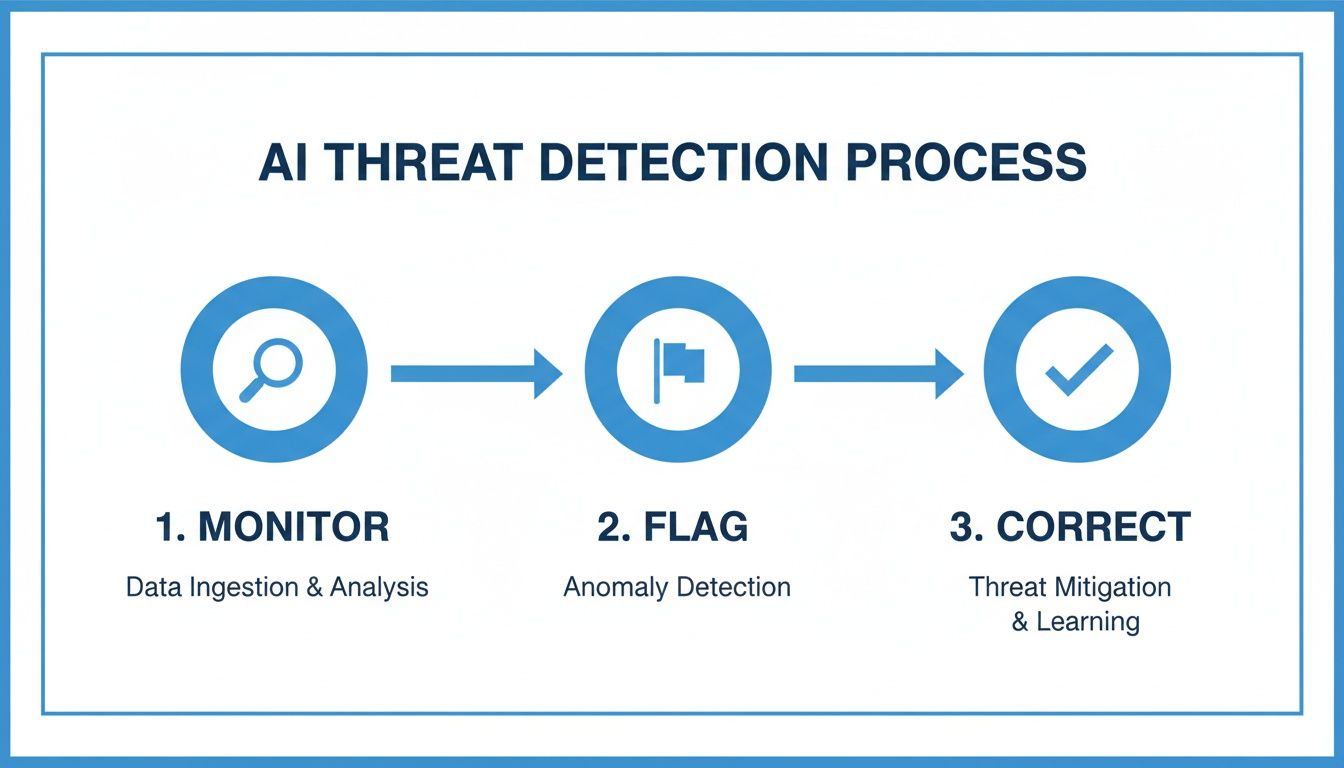
This simple Monitor-Flag-Correct loop highlights the need for constant vigilance and a clear path for escalating issues to the right people.
Lessons from the Tylenol Playbook
Some of the best crisis response principles weren't written last week; they were forged decades ago. The 1982 Johnson & Johnson Tylenol crisis is still the masterclass in putting people first. When cyanide-laced capsules caused multiple deaths, the company didn't hesitate or try to downplay it.
They recalled 31 million bottles of Tylenol, a move that cost them over $100 million but ultimately saved the brand. They took full ownership, acted decisively, and communicated with total transparency, sending 450,000 messages and pulling all advertising. It’s the ultimate proof that prioritizing public safety over short-term profit is the only way to ensure long-term survival. You can dive deeper into how this event shaped modern PR in these insightful crisis communication case studies.
Expert Insight: Never lie, never speculate, and never get defensive. In a crisis, your credibility is your most valuable currency. Once lost, it's almost impossible to get back. Stick to what you know for sure, admit what you don't, and keep the focus on your action plan.
Ultimately, your response has to be authentic. Take ownership of the problem, express genuine empathy for everyone affected, and provide a clear outline of what you're doing to fix it. This formula—Own, Empathize, Act—is the non-negotiable framework for holding onto trust when it matters most.
Recovering and Restoring Brand Trust
The immediate storm has passed. The flood of notifications has finally slowed to a trickle. It might feel like the crisis is over, but this is arguably the most critical phase of your entire PR strategy.
This is where you shift from reactive damage control to proactively rebuilding what was lost. True brand resilience isn't forged in how you respond during the chaos, but in how you learn and recover afterward.
Ignoring the lessons from a crisis is a surefire way to repeat your mistakes. Now is the time for an honest, no-blame post-mortem to figure out what happened, why it happened, and how you can fortify your defenses for the future.
Conducting a Thorough Post-Mortem Analysis
Once the dust settles, get your crisis team and key stakeholders in a room for a comprehensive review. The goal isn’t to point fingers; it's to identify the weak points and strengths in your response.
You have to be brutally honest here. Sugarcoating failures will only leave you vulnerable down the road.
Start by asking the tough questions:
- Speed and Accuracy: How quickly did we get accurate information to the public and our own employees? Were our initial holding statements actually effective?
- Team Performance: Did our designated spokespeople hold up under pressure? Was the chain of command clear, or was there confusion about who was supposed to do what?
- Process Efficiency: Did our monitoring systems give us a head start? Were our pre-approved materials genuinely helpful, or did we have to rewrite everything on the fly?
- External Perception: How did the media, our customers, and other stakeholders actually perceive our response? Did our messaging land with empathy, or did it sound corporate and cold?
This analysis becomes the new blueprint for your crisis playbook. Every insight, every mistake, and every small win should be documented to make your next response even stronger.
Measuring the Impact and Rebuilding Trust
After the internal review, you have to look outward and measure the real-world damage to your brand. This requires a mix of hard data and softer sentiment analysis to understand exactly how perceptions have shifted. You need to know the size of the hole you're digging out of.
Focus on tracking a few key metrics to gauge the health of your reputation:
- Brand Sentiment: Use social listening and media monitoring tools to track the ratio of positive, neutral, and negative mentions. Are you seeing a gradual return to your pre-crisis baseline?
- Search Visibility: What happens when people search for your brand name now? Are negative keywords still dominating the results, or are you starting to reclaim the narrative?
- Customer Loyalty: Keep a close eye on sales data, customer churn rates, and the tone of feedback coming through your support channels. Are customers coming back, or is there still hesitation?
A crisis is an opportunity to have an honest look at what communication strategies are working and which ones aren’t. It forces a reflection that can make the entire organization more resilient and attuned to its audience.
Rebuilding trust isn't a single action; it's a sustained campaign. You need to launch proactive initiatives that reinforce your company's values and show your commitment to customers. This could be anything from a customer appreciation campaign to a public report on the corrective actions you’ve taken.
Each step has to feel authentic and be designed to demonstrate—not just state—your renewed commitment. For a deeper dive, exploring the role of specialized AI reputation management consultants can offer a strategic advantage in this delicate phase.
The unfortunate reality is that crises are becoming more frequent. One report indicates that 70% of companies will face a crisis within a decade, making preparedness non-negotiable. As you can see from these lessons from brands that overcame PR disasters, having robust protocols in place before a crisis strikes is what allows teams to respond in minutes, not hours.
Ultimately, the recovery phase closes the loop, turning a moment of vulnerability into a catalyst for a stronger, more prepared organization.
Your Crisis PR Questions, Answered
A solid crisis plan can feel complicated, but it doesn't have to be. Let's cut through the noise and tackle the questions I hear most often from teams trying to get prepared.
What’s the Very First Thing I Should Do?
Before you write a single press release or designate a spokesperson, you need to map out your vulnerabilities. Seriously, this is the absolute first step.
Get your team in a room and brainstorm everything that could possibly go wrong. Think operational meltdowns, a data breach, a key employee going rogue on social media, or even supply chain nightmares.
For a local business, this list has to include new-age problems, too. What if an AI chatbot starts telling people you're closed on Saturdays? Or confidently recommends your biggest competitor? Once you have this "doom-and-gloom" list, you can prioritize each scenario by how likely it is to happen and how badly it would hurt. This risk map is the bedrock of your entire crisis strategy.
A lot of people think crises come out of nowhere. The truth is, you can see the shadows of most of them long before they arrive. You might not know the exact details, but you can absolutely plan for the types of problems your business is built to have.
How Can a Small Business Handle Crisis PR Without a Big Agency?
You don't need a massive budget or a fancy PR firm. For small businesses, the key is preparation and leaning on the right, scalable tools.
First, designate your crisis point person or a small, core team. This isn't a job for a committee. Then, create a dead-simple crisis playbook in a shared Google Doc. This should have pre-written holding statements for your most likely scenarios and a list of key contacts (your lawyer, key stakeholders, etc.).
Most importantly, get your monitoring in place. You can start with free tools like Google Alerts for your brand name. But for the threats that are sneaking up on everyone, a platform like TrackMyBiz is a game-changer. It's built to be accessible and specifically watches what AI assistants are saying about you—a massive blind spot for most companies. A little proactive setup costs next to nothing but saves you a world of pain later.
How Do You Actually Know if Your Crisis Plan Worked?
Measuring success isn't just about making the bad headlines go away. It’s a mix of short-term damage control and long-term recovery.
Right after a crisis hits, you're looking at a few key things:
- Media Sentiment: Are new stories still overwhelmingly negative, or have they shifted to neutral as you’ve gotten your facts out? Success here is moving the tone from panic to factual reporting.
- Social Media Chatter: Has the velocity of negative comments slowed down? Are people engaging with your official statements instead of just piling on? You're looking for a de-escalation.
- Website Traffic: Are people flocking to the crisis statement on your homepage? That's a good sign. It means you're successfully making your brand the source of truth.
Long-term, you're measuring the bounce-back:
- Brand Trust: Do customers still believe in you? Simple pre- and post-crisis surveys can give you a gut-wrenchingly honest answer.
- Sales Figures: This is the ultimate test. Have sales returned to where they were before the incident? This shows if customer confidence is truly back.
- Share of Voice: Are you back to being part of the normal industry conversation, or is every mention still tied to the crisis?
When dealing with an AI-driven crisis, a key metric is simple: how fast did you get the misinformation corrected across platforms?
Why Do I Suddenly Need to Worry About What ChatGPT Says?
Because your customers already are. AI and Large Language Models (LLMs) are quickly becoming the new search engine—the first place people go for answers. A modern crisis isn't just a bad news article anymore. It's an AI model confidently telling thousands of potential customers that your flagship product was recalled, or that your restaurant has "hygiene issues."
These AI "hallucinations" pop up without warning, and they're completely invisible to traditional social listening tools. It's a huge blind spot.
If you don't catch these falsehoods, they can quietly drain your revenue and destroy your reputation without you ever knowing why. Any crisis PR strategy that doesn't include monitoring this new threat landscape is already obsolete. You have to be able to spot these AI-driven lies so you can report them and protect your brand from this entirely new, and growing, vector of risk.
Protecting your brand means seeing the whole picture. TrackMyBiz gives you the visibility you need to monitor what AI assistants are saying about your business, flag inaccuracies instantly, and turn a potential crisis into a manageable channel. Start your free scan today to see where you stand.
