In today's crowded market, customer perception is everything. A single negative tweet, a misleading AI-generated summary, or a series of poor reviews can erode brand trust faster than ever. But how do you quantify something as subjective as 'sentiment'? The answer lies in sophisticated brand sentiment analysis tools that go beyond simple keyword tracking to measure the emotional tone surrounding your brand.
These platforms analyze public conversations across social media, news sites, AI assistants, and review platforms to classify mentions as positive, negative, or neutral. This isn't just about PR damage control; proactive sentiment analysis helps you understand customer needs, identify product improvement opportunities, and benchmark against competitors. To understand the operational benefits of deciphering large volumes of feedback, consider learning more about automatic sentiment analysis for reviews.
However, the landscape of tools is vast and specialized. A tool designed for enterprise-level social listening might be overkill for a local business focused on Google reviews, while a platform monitoring AI chatbots addresses a blind spot traditional tools miss. This guide cuts through the noise. We break down the 12 best brand sentiment analysis tools by their core strengths and ideal use cases, helping you choose the right solution to protect your reputation and drive growth.
Each entry includes a direct link, screenshots, pricing cues, and an honest look at pros and cons to help you find the perfect fit for your specific needs, whether you're a multi-location retailer, a PR manager, or a digital agency.
1. TrackMyBiz
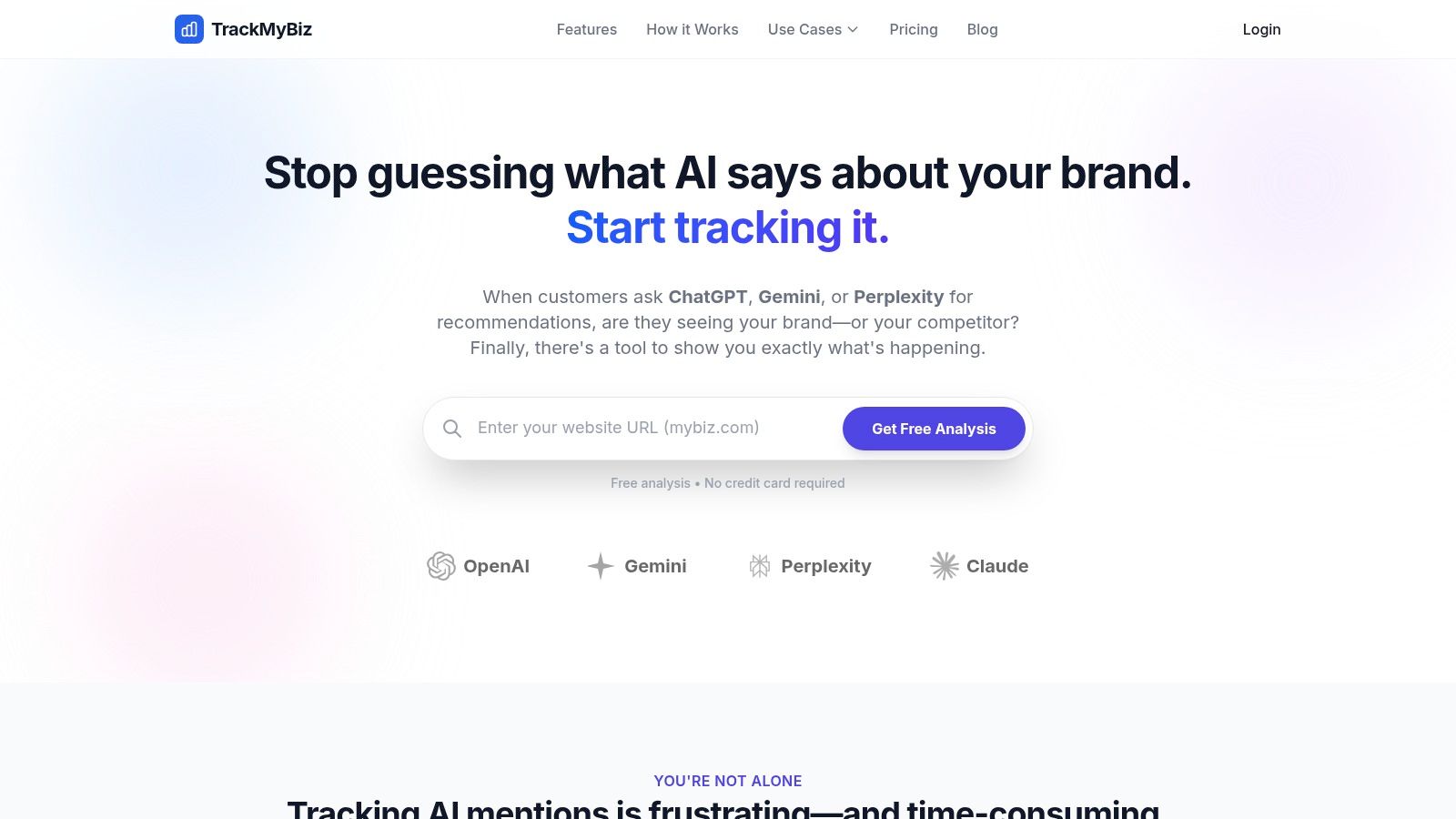
TrackMyBiz positions itself as an essential "Search Console for AI," offering a specialized and proactive approach to brand sentiment analysis in the era of large language models (LLMs). Instead of passively monitoring social media, it directly audits what major chatbots like ChatGPT, Gemini, Perplexity, and Claude are telling users about your brand, services, and products. This tool is purpose-built to tackle the unique challenges of AI-generated information, where inaccuracies can spread rapidly and without warning.
Its core strength lies in transforming unpredictable LLM outputs into stable, actionable data. By automatically running hundreds of queries multiple times, it moves beyond anecdotal, one-off prompts to establish reliable visibility trends and a quantifiable BrandRank. This allows businesses to see exactly where they stand against competitors when users ask AI assistants for recommendations.
Key Features and Strategic Advantages
The standout feature is its Safety Engine, an intelligent system designed to combat AI hallucinations. It cross-references the LLM’s responses against your website's actual data, instantly flagging critical errors like incorrect business hours, fabricated pricing, or false "permanently closed" statuses. This function is invaluable for local and multi-location businesses where such misinformation can directly impact foot traffic and revenue.
Actionable intelligence is another key differentiator. The platform doesn't just report problems; it provides the context needed to solve them. Dashboards reveal which online sources (like reviews or articles) the LLMs are citing, giving PR and SEO teams a clear roadmap for correcting the root cause of negative sentiment or misinformation. With configurable alerts and regional tracking, marketing teams can monitor brand perception across different markets and respond with precision.
Implementation and Pricing
Getting started is exceptionally straightforward, with a setup process that takes under two minutes and a free initial scan that requires no credit card. This low barrier to entry makes it an accessible tool for businesses of all sizes wanting to explore their AI visibility.
- Pricing: Begins with a Basic plan at $4.99/mo, scaling to Advanced ($9.99/mo) and Enterprise ($89/mo) to accommodate more tracked prompts, competitors, and regions.
- Guarantee: All paid plans come with a 30-day money-back guarantee, offering a risk-free trial period.
Pros & Cons
| Pros | Cons |
|---|---|
| Automated Multi-LLM Monitoring: Tracks ChatGPT, Gemini, Perplexity, and Claude for comprehensive coverage. | Limited Model Scope: Coverage is restricted to the tracked LLMs; emerging or niche platforms may not be included. |
| Hallucination Detection: The Safety Engine proactively flags and alerts on factually incorrect AI-generated claims. | Plan Limitations: Lower-tier plans have caps on tracked prompts and competitors, which may be insufficient for larger enterprises. |
| Actionable Source Insights: Pinpoints the online content influencing LLM responses, guiding content and PR strategy. | |
| Affordable & Risk-Free Entry: A free scan, low-cost starter plans, and a money-back guarantee make it easy to adopt. |
Website: https://trackmybusiness.ai
2. Brandwatch
Brandwatch is a powerhouse in the consumer intelligence space, offering one of the most comprehensive brand sentiment analysis tools for enterprise-level organizations. It excels at sifting through millions of online conversations from social media, forums, and news sites to automatically classify sentiment. Its deep data access and flexible dashboarding capabilities allow teams to monitor brand health in real-time.
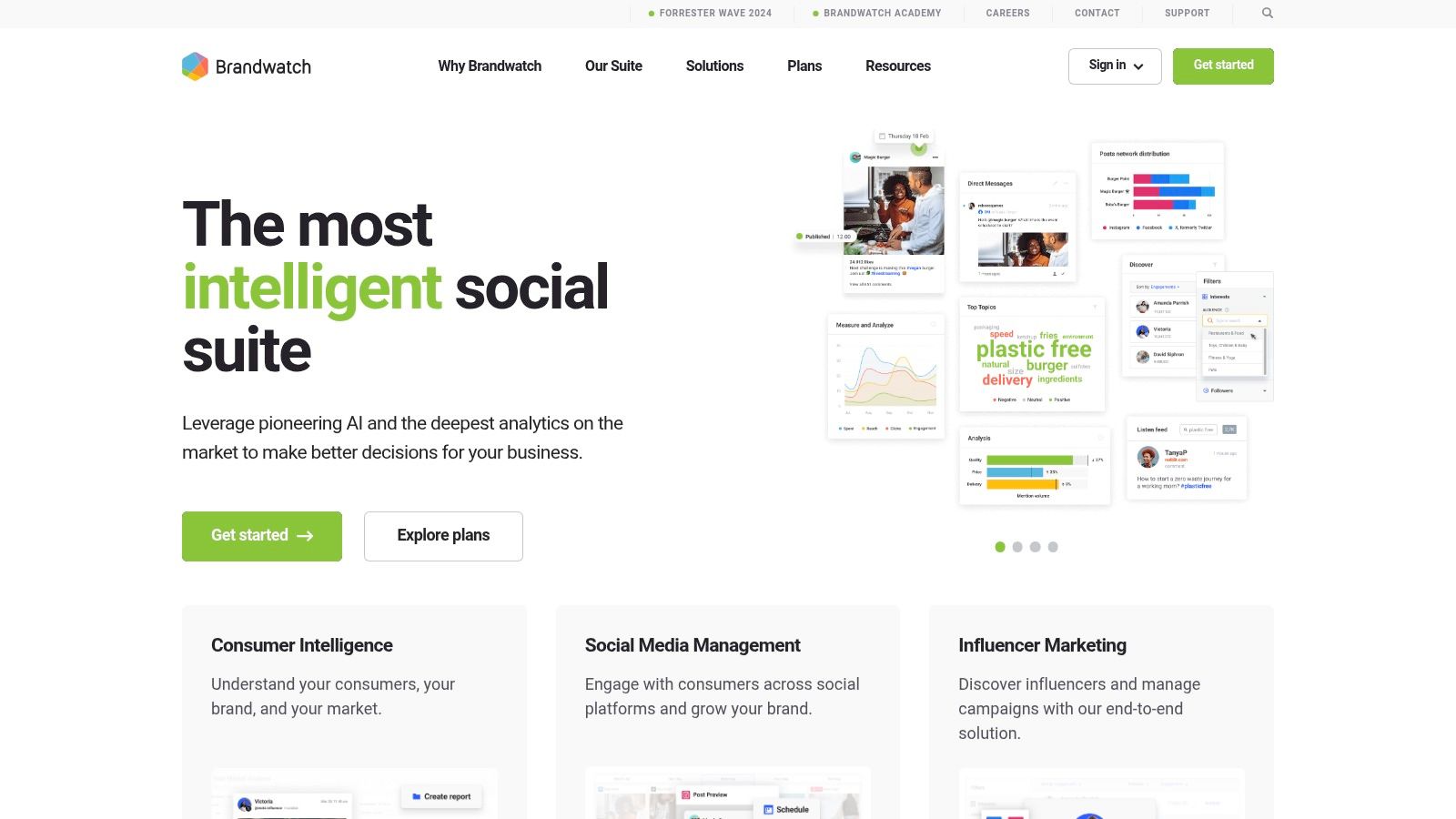
The platform stands out with its AI-powered features, including an assistant named Iris that helps uncover unexpected trends and insights from your data. Furthermore, its image and logo recognition technology can track visual mentions of your brand, even when your name isn't explicitly tagged, providing a more complete picture of your online presence. Many contracts also include unlimited user seats, making it a scalable solution for large marketing, PR, and analytics departments.
Features and Use Case
- Best For: Enterprise-level PR, communications, and brand reputation managers who need deep, global data coverage and advanced analytics.
- Key Features: Automated sentiment classification, AI-driven trend detection (Iris), image/logo recognition, customizable dashboards, and robust API access.
- Implementation Tip: Take advantage of Brandwatch’s advanced query language. While it has a learning curve, mastering Boolean operators will allow you to build highly specific and accurate sentiment trackers that filter out irrelevant noise.
Platform Analysis
| Aspect | Evaluation |
|---|---|
| Pricing | Premium and quote-based. Access is granted after a demo and consultation, making it a significant investment suited for larger budgets. |
| Pros | Extensive social data coverage across 40+ languages, powerful and flexible reporting dashboards, strong enterprise workflows like alerts and data exports. |
| Cons | The cost can be prohibitive for smaller businesses, and the complexity of its query setup requires dedicated training to use the platform to its full potential. |
| Website | https://www.brandwatch.com/ |
For a closer look at how Brandwatch stacks up against other platforms in its category, explore some of the top competitor AI analysis tools.
3. Talkwalker
Talkwalker is an enterprise-grade consumer intelligence platform that delivers powerful brand sentiment analysis tools by leveraging over 150 million sources. Its proprietary Blue Silk AI engine automatically assigns sentiment to conversations from social media, news, blogs, and forums across more than 30 platforms. This allows brands to get a comprehensive view of public perception and track emotional shifts in real-time.
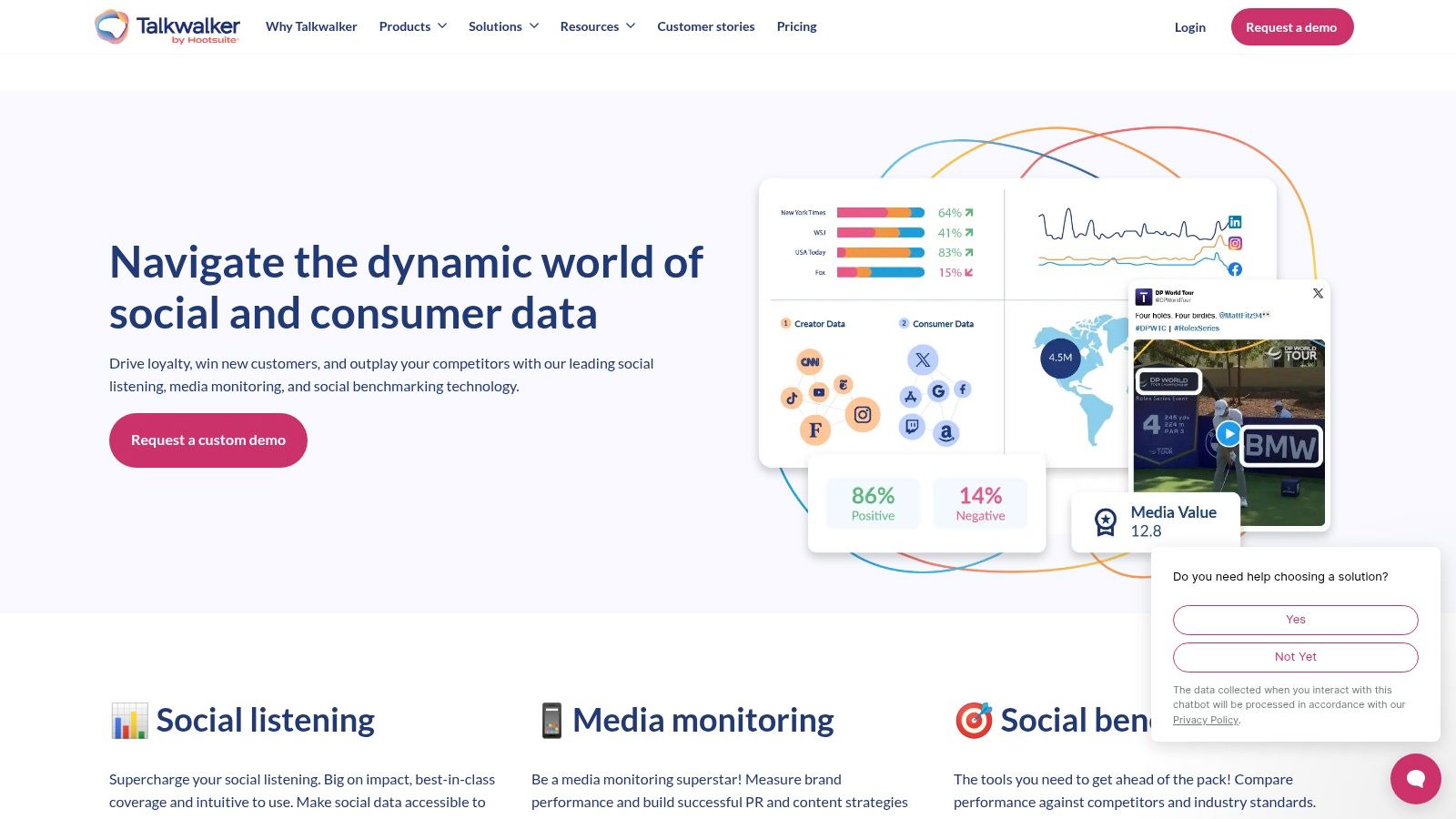
The platform is known for its strong onboarding support and packaged plans that often include unlimited user seats, making it highly collaborative for large teams. Talkwalker’s pre-built IQ Apps and customizable dashboards simplify the process of benchmarking performance against competitors and identifying key conversation drivers. Its global language coverage and real-time alerting system ensure that brands can react quickly to emerging reputational threats or opportunities anywhere in the world.
Features and Use Case
- Best For: Global corporations and agencies that need extensive data source coverage and a collaborative platform for monitoring brand health and competitive intelligence.
- Key Features: AI-powered sentiment with basic sarcasm detection, pre-built IQ Apps for quick analysis, global language support, real-time alerts, and unlimited users on most plans.
- Implementation Tip: Use Talkwalker's benchmarking features to create a dedicated dashboard comparing your brand's sentiment score against two or three key competitors. This provides immediate context for your performance and helps identify industry-wide trends.
Platform Analysis
| Aspect | Evaluation |
|---|---|
| Pricing | Quote-based with packaged plans (Listen, Analyze, Business). The sales-led purchasing process is typical for enterprise software. |
| Pros | Extremely broad data and source coverage, excellent customer onboarding and support, and the inclusion of unlimited users makes it scalable. |
| Cons | No public pricing requires engaging with sales for a quote, and some of the most advanced AI features are reserved for higher-tier plans. |
| Website | https://www.talkwalker.com/ |
4. Sprout Social (Listening add-on)
Sprout Social is a well-regarded social media management platform that extends its capabilities into one of the most accessible brand sentiment analysis tools through its Listening add-on. Rather than being a standalone tool, it integrates seamlessly into a broader social media workflow, allowing teams to monitor sentiment, trends, and competitor conversations directly within their primary management suite. The platform excels at translating complex social data into easy-to-understand reports.
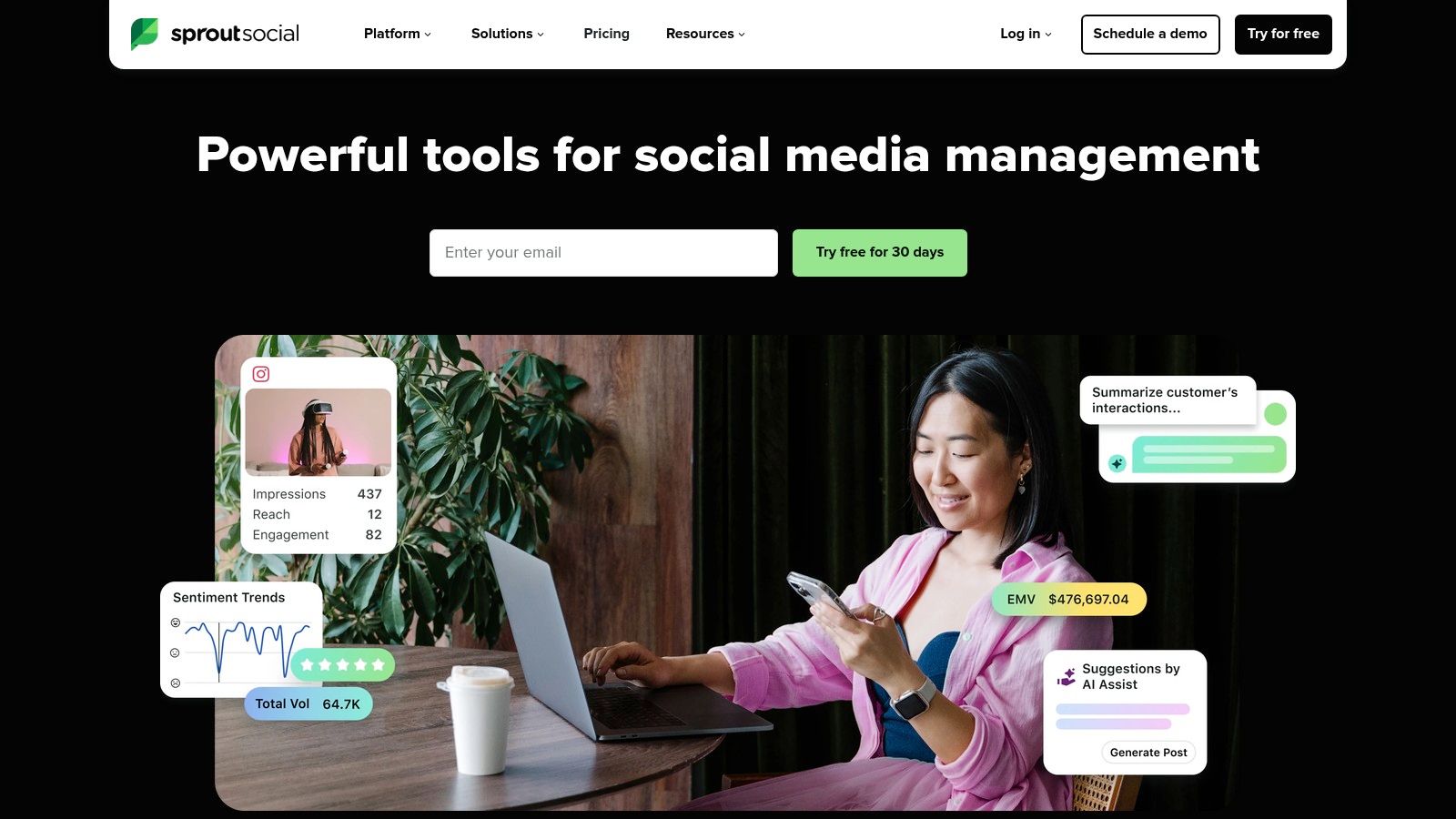
Its strength lies in its user-friendly interface and robust reporting features, which make sophisticated analysis approachable for teams without dedicated data scientists. The Listening module’s Query Builder helps users define topics and keywords, while the Conversation Breakdown visualizes sentiment shifts over time. This makes it an ideal choice for businesses already using Sprout for publishing and engagement, who want to add a powerful layer of market intelligence without adopting an entirely new system.
Features and Use Case
- Best For: Marketing teams and agencies that need an integrated social media management and sentiment analysis solution with a strong focus on usability and reporting.
- Key Features: Listening Topic Insights with Sentiment Summary, Conversation Breakdown by sentiment, keyword trend analysis, and a visual Query Builder.
- Implementation Tip: Start with a broad topic query and use the Conversation Breakdown widget to identify irrelevant keywords. Refine your query by excluding those terms to improve the accuracy of your sentiment data over time.
Platform Analysis
| Aspect | Evaluation |
|---|---|
| Pricing | The Listening feature is a paid add-on to Sprout Social’s core subscription plans, which start with self-serve options and offer a 30-day trial. |
| Pros | Highly intuitive and easy-to-use interface, powerful and visually appealing reporting, and an extensive support library to help users get started quickly. |
| Cons | As an add-on, the Listening module significantly increases the overall cost. Some of the most advanced sentiment analysis features are limited to higher-tier plans. |
| Website | https://sproutsocial.com/ |
For those who prefer a hands-on approach, explore how top AI reputation management consultants leverage tools like this to build comprehensive brand strategies.
5. Meltwater
Meltwater offers an end-to-end media intelligence platform where its brand sentiment analysis tools serve as a core component for monitoring a company’s public perception. It goes beyond standard social media, pulling data from global news, broadcast media, podcasts, and review sites to provide a holistic view of brand conversations. Its AI-driven engine not only classifies sentiment but also identifies underlying emotions, giving marketing teams deeper context.
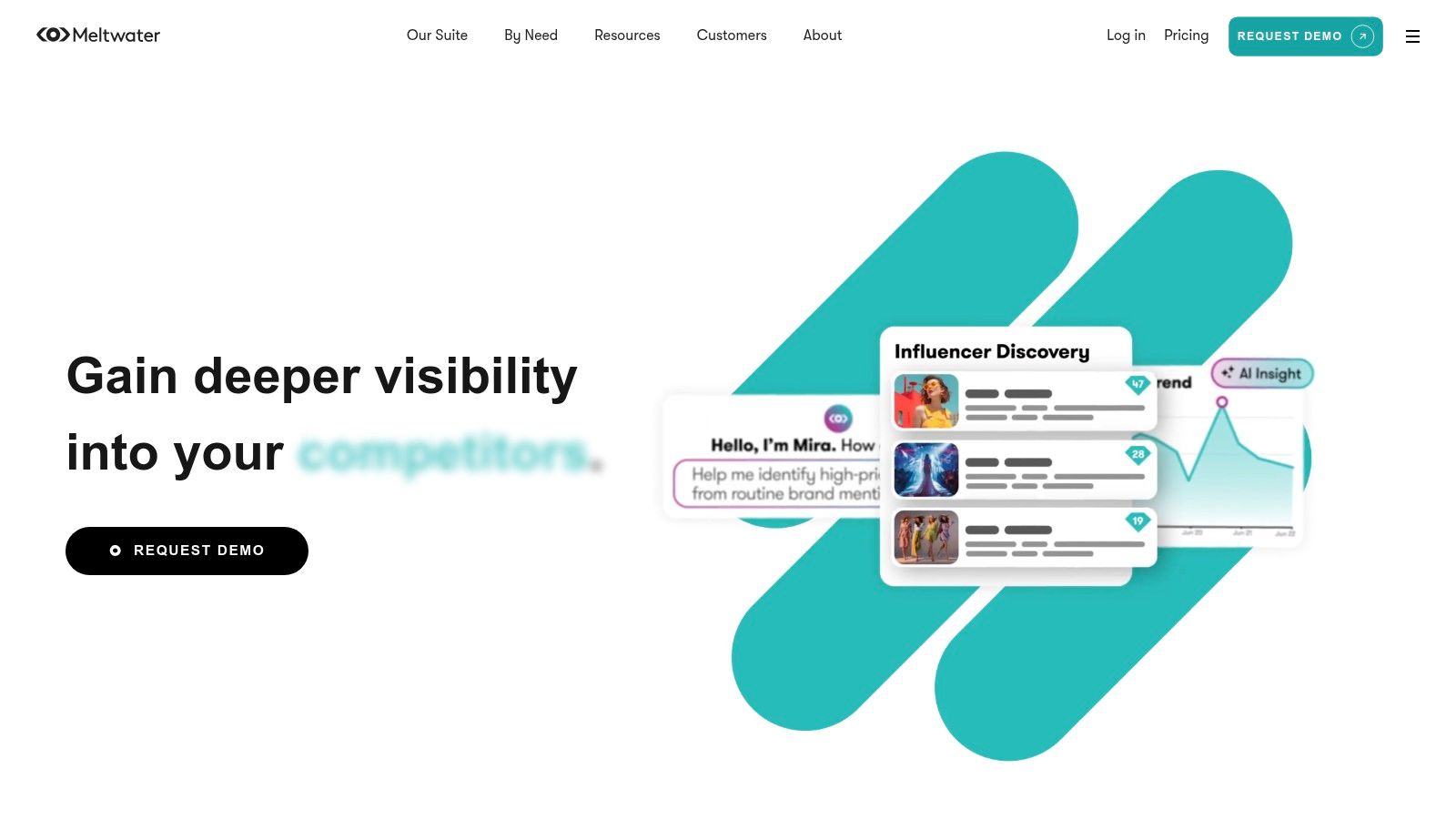
The platform is distinguished by its extensive source coverage and its innovative GenAI Lens feature, which tracks how LLMs like ChatGPT mention and perceive your brand. This forward-looking tool is crucial for modern PR and communications professionals managing brand reputation in the age of generative AI. With real-time alerts and strong enterprise support, Meltwater is built to integrate directly into the workflows of large, global teams.
Features and Use Case
- Best For: Large organizations and PR agencies needing comprehensive, multi-channel media monitoring with a focus on news, broadcast, and emerging AI-driven conversations.
- Key Features: AI-powered sentiment and emotion analysis, broad content coverage (news, social, broadcast, podcasts), GenAI Lens for LLM tracking, real-time alerts, and trend detection.
- Implementation Tip: Utilize Meltwater's modular plans to your advantage. Start with the core media monitoring suite and add more specialized features like the GenAI Lens or social listening modules as your needs evolve to control costs effectively.
Platform Analysis
| Aspect | Evaluation |
|---|---|
| Pricing | Entirely quote-based and requires a sales-led demo. There is no self-serve trial, positioning it as a premium solution for well-funded teams. |
| Pros | Strong enterprise support and training, expansive global data sources in multiple languages, and flexible export and API options for data integration. |
| Cons | The lack of transparent pricing and a self-serve trial can be a barrier for evaluation, and the cost can escalate as more advanced features are added. |
| Website | https://www.meltwater.com/ |
6. Sprinklr (Insights / Consumer Intelligence)
Sprinklr is a unified customer experience management (CXM) platform where its Insights suite serves as a sophisticated brand sentiment analysis tool. It goes beyond simple text analysis by processing sentiment and emotion across audio, video, and images from over 30 digital channels. This holistic approach provides a comprehensive view of customer conversations and brand perception in one integrated environment.
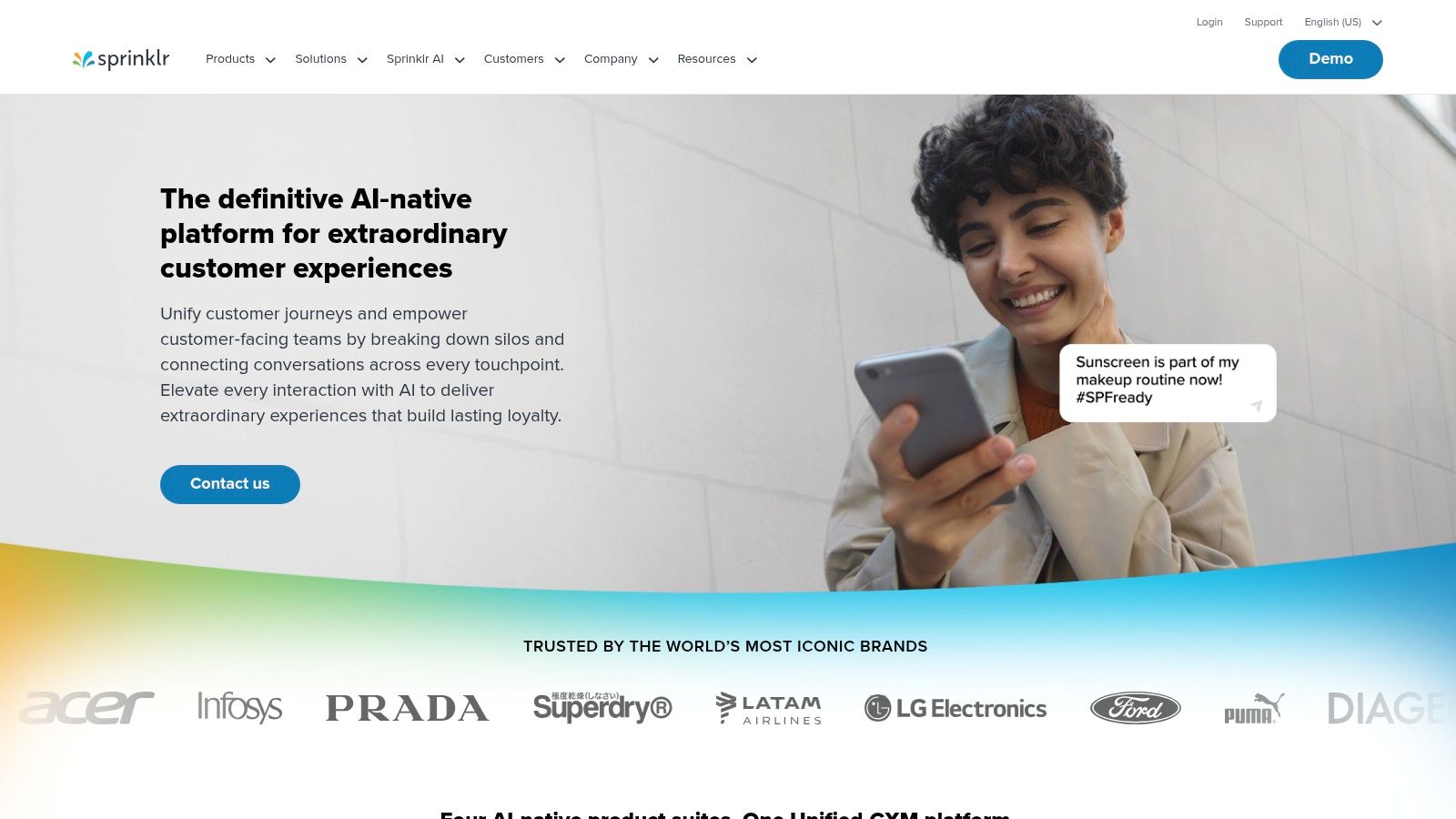
The platform leverages AI to deliver generative summaries, predictive insights, and a conversational Copilot for querying data. A key differentiator is its validation interface, which allows teams to review and confirm the accuracy of the sentiment model, enhancing trust in the data. This makes Sprinklr a powerful solution for enterprises needing a single source of truth for all customer-facing interactions, from marketing to customer care.
Features and Use Case
- Best For: Large enterprises seeking a unified platform to manage customer experience and derive sentiment insights across multiple departments and media types.
- Key Features: Multi-modal sentiment analysis (text, audio, image, video), GenAI-powered summaries, Copilot Q&A, predictive analytics, and a sentiment validation interface.
- Implementation Tip: Dedicate resources to the initial setup and onboarding process. Sprinklr's power comes from its integration, so work closely with their team to connect all relevant data sources and configure workflows to align with your specific business goals.
Platform Analysis
| Aspect | Evaluation |
|---|---|
| Pricing | Quote-based and tailored to enterprise needs. The Insights suite is part of a larger platform, making it a significant investment requiring consultation and a custom proposal. |
| Pros | Broad data coverage beyond just text (audio, video), deep enterprise-level governance and integrations, and a unified platform for a single view of the customer. |
| Cons | Pricing can be at the high end for enterprise software, and realizing its full value requires a significant commitment to setup, training, and platform adoption. |
| Website | https://www.sprinklr.com/ |
7. Brand24
Brand24 offers one of the most accessible and self-serve brand sentiment analysis tools designed for small businesses, agencies, and mid-market companies. It delivers real-time social listening capabilities, allowing users to track brand mentions across social media, blogs, news sites, and forums. The platform automatically assigns sentiment scores (positive, negative, neutral) to each mention, helping teams quickly gauge public perception.
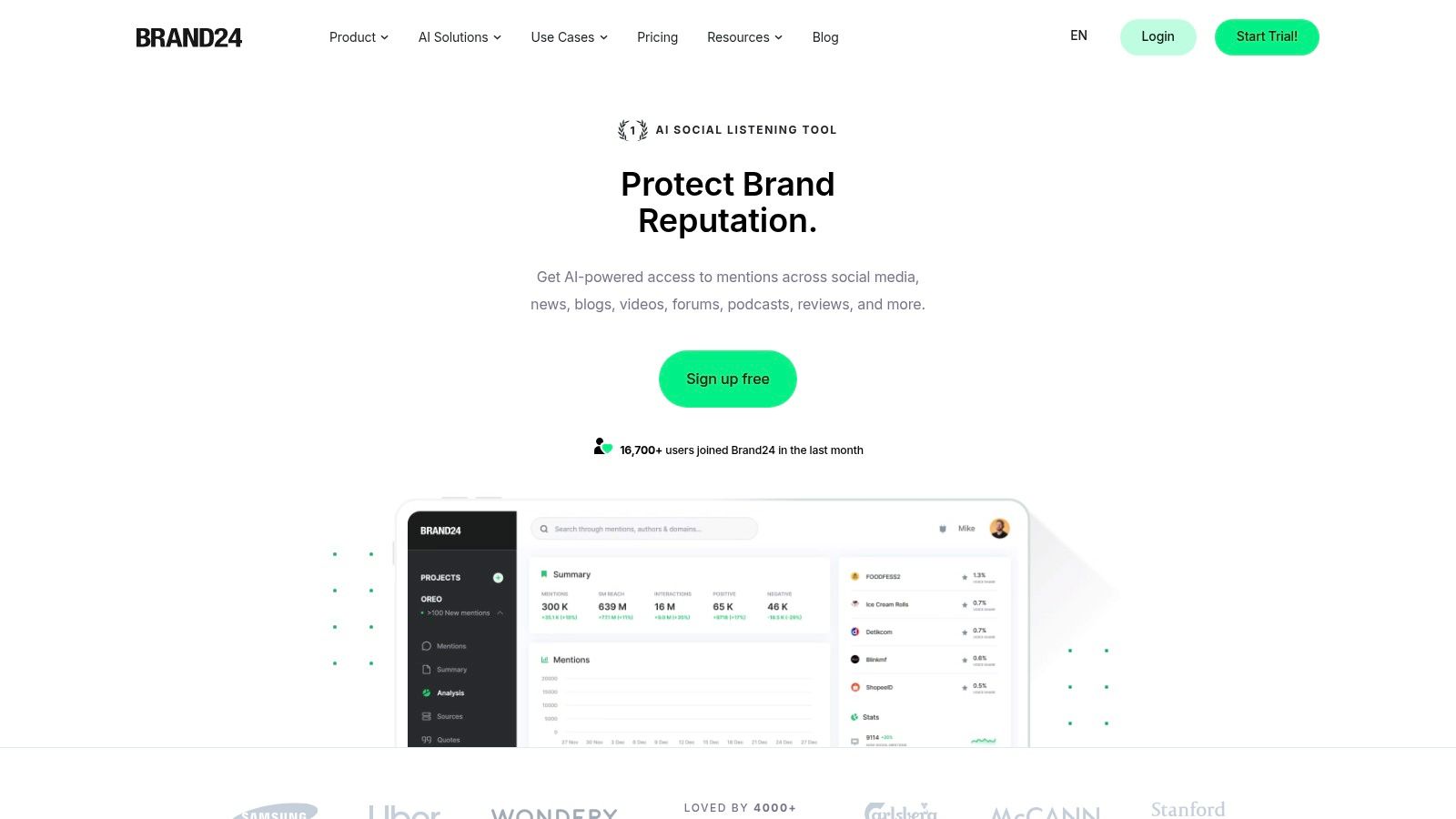
What makes Brand24 stand out in a crowded market is its combination of powerful features with transparent, affordable pricing and a user-friendly interface. It includes "Storm Alerts" that notify you of sudden spikes in negative conversation, enabling rapid crisis response. Its dashboards are intuitive, providing clear visualizations of sentiment trends, reach, and key conversation sources without requiring extensive training.
Features and Use Case
- Best For: SMBs, marketing agencies, and mid-sized teams that need a fast, affordable, and effective tool for real-time brand monitoring and reputation management.
- Key Features: AI sentiment and emotion analysis, automated storm alerts, topic and intent filters, real-time mention tracking, and customizable PDF reports.
- Implementation Tip: Use the topic and intent filters to segment your data effectively. For example, create a filter for "customer service" to isolate sentiment related specifically to support interactions, giving you actionable feedback for that department.
Platform Analysis
| Aspect | Evaluation |
|---|---|
| Pricing | Transparent, tiered monthly plans with a 14-day free trial. This makes it easy for smaller organizations to get started without a long-term commitment. |
| Pros | Very easy to set up and use, provides instant value with real-time alerts, and its pricing model is a great fit for SMBs and agencies managing multiple clients. |
| Cons | Keyword and mention volume caps on lower-tier plans can be restrictive for high-volume brands, and it offers less customization than enterprise-level suites. |
| Website | https://brand24.com/ |
8. Mention
Mention is a media monitoring platform that provides accessible and real-time brand sentiment analysis tools for businesses of all sizes. It excels at tracking conversations across social media, forums, blogs, and over 75 review sites, making it a strong choice for brands focused on managing their online reputation. The platform automatically assigns sentiment (positive, negative, neutral) to mentions, allowing teams to quickly gauge public perception and respond to critical feedback.
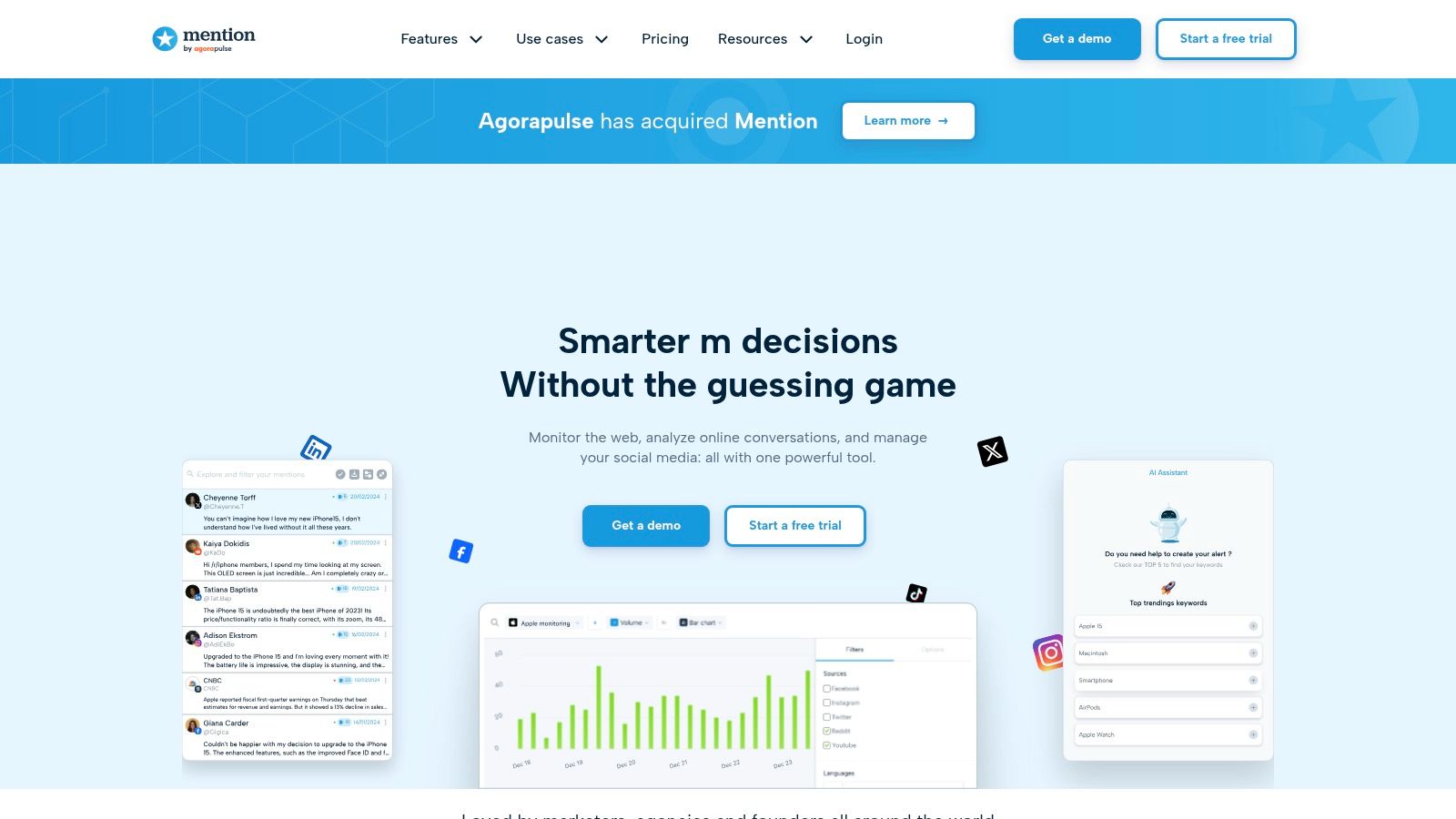
Unlike some enterprise-only solutions, Mention offers transparent, self-serve plans that make it easy for small and medium-sized businesses to get started. Its real-time alerts ensure you never miss an important conversation, while its custom reporting and competitor benchmarking features help you contextualize your brand's performance. The platform's focus is on monitoring and analysis, providing clean, actionable data without bundling in complex publishing tools that many teams already have.
Features and Use Case
- Best For: Small to mid-sized businesses, agencies, and brand managers who need an affordable, real-time monitoring tool with strong coverage of review sites.
- Key Features: Real-time tracking across social and web sources, automated sentiment analysis, Boolean search queries, custom reports with historical data, and team collaboration tools.
- Implementation Tip: Use Mention's Boolean search capabilities to create hyper-specific alerts. For example, track your brand name alongside keywords like "issue" or "broken" to isolate negative sentiment and route it directly to your customer support team for a faster response.
Platform Analysis
| Aspect | Evaluation |
|---|---|
| Pricing | Offers transparent self-serve Company plans with clear "starting at" pricing. Custom quotes are available for higher-volume enterprise needs. |
| Pros | Strong coverage of review and reputation sources, user-friendly interface, and accessible pricing tiers for smaller teams and growing businesses. |
| Cons | Publishing and response features have been deprecated (recommends a partner tool), and unlocking higher mention volumes or advanced features requires higher-tier plans. |
| Website | https://mention.com/ |
9. Qualtrics (XM Discover / Clarabridge)
Qualtrics, through its acquisition of Clarabridge (now XM Discover), offers one of the most powerful conversational analytics platforms for understanding brand sentiment at a granular level. It moves beyond simple positive or negative labels by analyzing unstructured feedback from contact centers, reviews, support tickets, and social media to identify not just sentiment, but also emotion, intent, and customer effort. This makes it an exceptional tool for unifying customer experience (CX) data with brand perception.
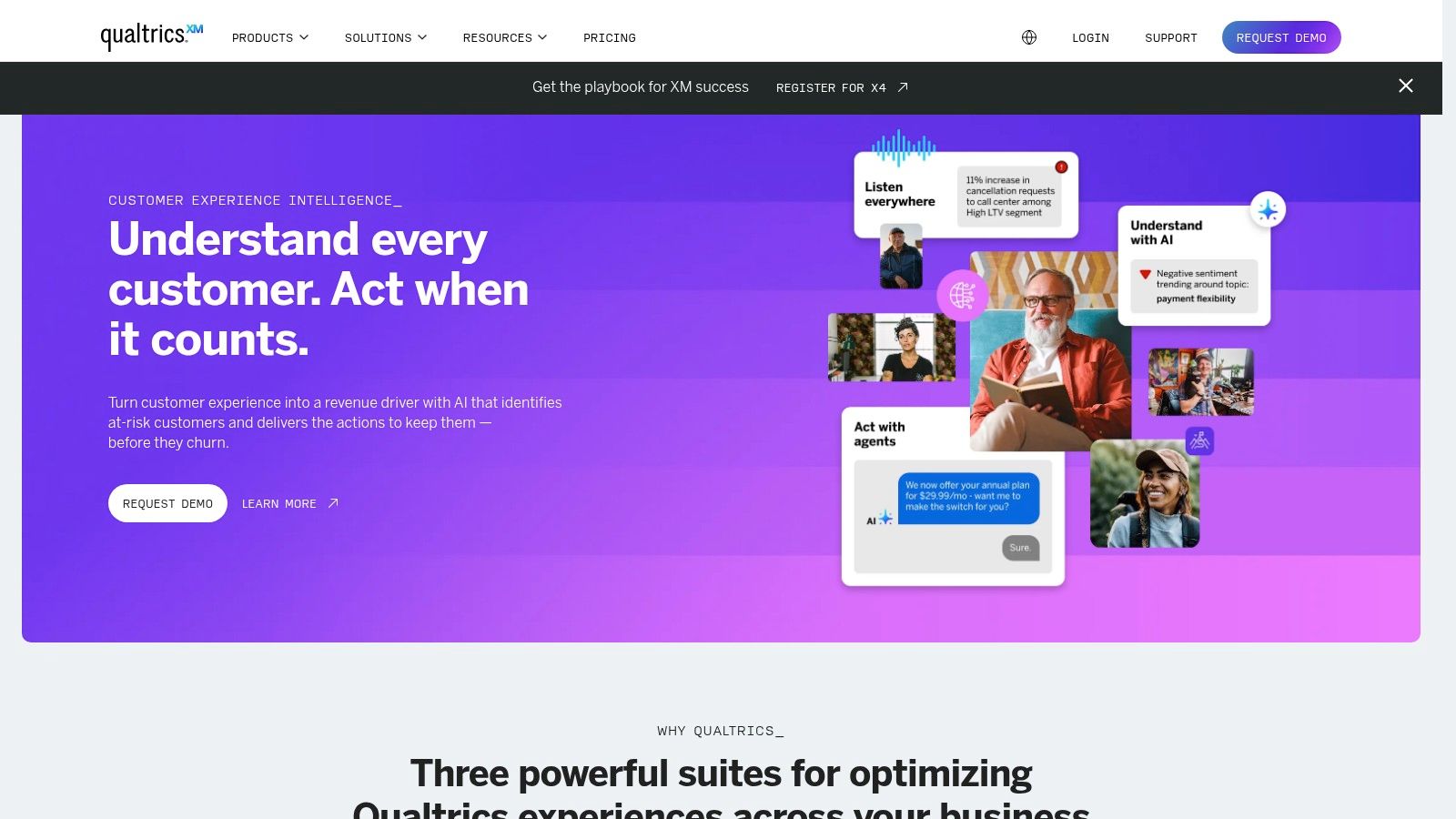
The platform's strength lies in its 150+ pre-trained industry NLU models, which provide nuanced understanding of customer feedback without extensive setup. By integrating this voice-of-customer (VoC) data directly into the Qualtrics Experience Management (XM) suite, businesses can trigger automated workflows and personalize customer interactions based on sentiment drivers. This creates a direct link between brand sentiment analysis and actionable business outcomes.
Features and Use Case
- Best For: Large enterprises and customer experience teams looking to integrate deep conversational analytics with their broader VoC and CX programs.
- Key Features: Industry-specific NLU models for sentiment, emotion, and intent; unification of social, support, and survey data; automated action triggers via xFlow; and Experience iD for contextual analysis.
- Implementation Tip: Leverage the Experience iD functionality to connect sentiment data with individual customer profiles. This allows you to track how sentiment shifts over the entire customer journey and identify specific touchpoints that are driving negative or positive perceptions.
Platform Analysis
| Aspect | Evaluation |
|---|---|
| Pricing | Enterprise-level and quote-based. Access is part of the broader Qualtrics XM suite, making it a significant investment designed for large-scale operations. |
| Pros | Unparalleled depth in contact center and VoC analytics, robust integration within the Qualtrics ecosystem for actioning insights, strong governance. |
| Cons | Pricing is prohibitive for smaller businesses, and its complexity as part of a larger suite makes it less suitable than simpler point solutions for basic monitoring. |
| Website | https://www.qualtrics.com/ |
10. Amazon Web Services — Amazon Comprehend
Amazon Comprehend isn't a standalone platform but a powerful, developer-focused Natural Language Processing (NLP) service from AWS. It provides the raw ingredients for building custom brand sentiment analysis tools directly into your applications or data pipelines. By leveraging its API, developers can programmatically analyze text from customer reviews, support tickets, or social media feeds to classify sentiment as Positive, Negative, Neutral, or Mixed.
The service stands out for its flexibility and integration within the vast AWS ecosystem. Beyond basic sentiment, it offers entity detection, key phrase extraction, and even targeted sentiment, which identifies the sentiment toward specific entities within text (e.g., a specific product feature in a long review). This granular, pay-as-you-go model makes it a highly scalable and cost-effective solution for teams with engineering resources who need to build a bespoke sentiment analysis workflow.
Features and Use Case
- Best For: Development teams and data scientists who need to embed sentiment analysis capabilities into their own software, data warehouses, or business intelligence tools.
- Key Features: Sentiment analysis API, entity and key phrase extraction, PII detection, targeted sentiment, asynchronous and real-time processing options.
- Implementation Tip: Start with the free tier to process a sample of your text data. This will help you estimate your monthly costs accurately and understand the API's response structure before committing to a large-scale implementation.
Platform Analysis
| Aspect | Evaluation |
|---|---|
| Pricing | Pay-as-you-go based on usage, with a generous free tier for the first 12 months. Costs vary by region and volume, requiring careful monitoring. |
| Pros | Highly scalable with fine-grained, usage-based pricing. Seamlessly integrates with the broader AWS ecosystem for building comprehensive data pipelines. |
| Cons | Requires significant engineering effort to implement; there are no out-of-the-box dashboards or user interfaces. It is a service, not a ready-to-use tool. |
| Website | https://aws.amazon.com/comprehend/ |
For organizations looking to leverage this kind of technology, it's often best to work with specialized partners. You can find experts among top LLM visibility tracking agencies.
11. Google Cloud — Natural Language API
For teams with development resources, Google Cloud's Natural Language API provides a powerful and scalable engine for building custom brand sentiment analysis tools. Instead of offering a pre-built dashboard, it delivers raw sentiment data via an API, allowing you to integrate its text analysis capabilities directly into your own applications, data warehouses, or business intelligence platforms. It excels at parsing unstructured text to return document-level and sentence-level sentiment scores.
The platform’s strength lies in its granular analysis. It can identify sentiment not just for an entire block of text but also for specific entities (like your brand name or product) mentioned within it. This entity-level sentiment is crucial for understanding the precise context of a conversation. With extensive documentation, client libraries for popular programming languages, and a usage-based pricing model, it’s an accessible way to harness Google’s machine learning for text analytics.
Features and Use Case
- Best For: Companies and developers who need to integrate sentiment analysis into their existing software, data pipelines, or custom analytics dashboards.
- Key Features: Document and sentence-level sentiment scores, entity sentiment analysis, syntax and content classification, and client libraries for easy integration.
- Implementation Tip: Start by processing a small, diverse sample of your brand's mentions to calibrate how the API's sentiment scores (ranging from -1.0 to 1.0) align with your internal definitions of negative, neutral, and positive. This will help you set accurate thresholds for your automated reporting.
Platform Analysis
| Aspect | Evaluation |
|---|---|
| Pricing | Usage-based with a free tier. You pay per 1,000 characters analyzed, making it cost-effective for small projects and scalable for large-volume data processing. |
| Pros | Highly accurate and granular sentiment analysis, straightforward API with excellent documentation and SDKs, and a generous free tier for getting started. |
| Cons | Requires developer resources to implement; it is not a turnkey dashboard solution. Pricing can become complex to predict when analyzing a high volume of data. |
| Website | https://cloud.google.com/natural-language |
12. MonkeyLearn
MonkeyLearn positions itself as an accessible yet powerful text analysis platform, offering a unique no-code approach to brand sentiment analysis tools. It empowers teams without deep technical expertise to build and deploy custom sentiment models tailored to their specific industry jargon and context. The platform is designed to take raw, unstructured text from sources like surveys, reviews, or social media and transform it into actionable data.
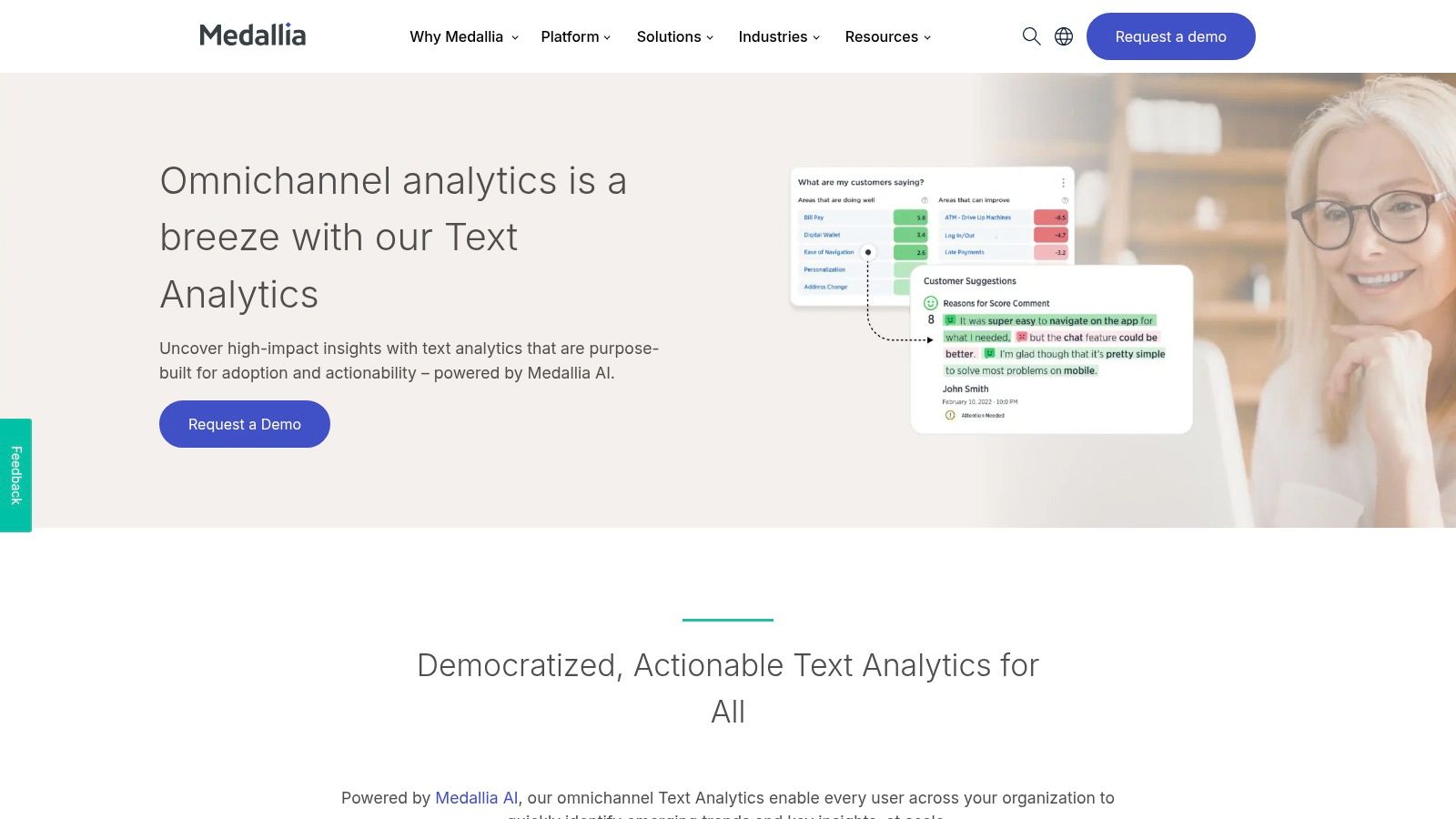
What sets MonkeyLearn apart is its intuitive workflow for creating bespoke classifiers. Users can upload data, manually label a sample set to teach the model what positive, negative, or neutral means for their brand, and then use the trained model to analyze new data at scale. This blend of user-friendly tools and custom model training provides a middle ground between rigid, pre-built tools and complex, code-heavy developer APIs.
Features and Use Case
- Best For: Marketing and product teams who need to analyze specific text datasets (like NPS surveys or support tickets) with a custom sentiment model but lack dedicated data science resources.
- Key Features: No-code custom model training, pre-built text analysis models, data visualization dashboards, and direct integrations with Google Sheets, Zapier, and Zendesk.
- Implementation Tip: Start with one of MonkeyLearn’s pre-trained sentiment models to get a baseline. Then, use the labeling interface to fine-tune it with your own data, focusing on industry-specific terms and nuances the generic model might misinterpret.
Platform Analysis
| Aspect | Evaluation |
|---|---|
| Pricing | Offers a free plan for low-volume analysis. Paid plans are tiered based on the number of queries (data points analyzed) per month, with custom enterprise options available. |
| Pros | Highly accessible for non-developers, allows for custom model training for higher accuracy, and integrates seamlessly with common business tools. |
| Cons | High-volume analysis can become costly compared to some competitors. Achieving high accuracy with a custom model requires a thoughtful data labeling effort. |
| Website | https://monkeylearn.com/ |
Top 12 Brand Sentiment Tools — Comparison
| Product (what it does) | Core features ✨ | Quality ★ | Best for 👥 | Price / Value 💰 |
|---|---|---|---|---|
| 🏆 TrackMyBiz — Search Console for AI | Multi-LLM monitoring, Safety Engine (hallucination checks), BrandRank, regional tracking ✨ | ★★★★★ | 👥 Local / multi-location businesses, marketing & agencies | 💰 From $4.99–$89/mo; free scan + 30‑day money‑back |
| Brandwatch — Enterprise social listening | AI Iris insights, sentiment, image/logo recognition, dashboards ✨ | ★★★★☆ | 👥 Enterprises, large PR & insights teams | 💰 Quote-based (enterprise) |
| Talkwalker — Listening & analytics | 150M+ sources, AI sentiment (sarcasm), IQ Apps, real-time alerts ✨ | ★★★★☆ | 👥 Global brands, comms teams | 💰 Quote-based |
| Sprout Social (Listening add‑on) | Listening Topic Insights, sentiment trends, query builder ✨ | ★★★☆☆ | 👥 Social managers, SMBs & mid-market | 💰 Add‑on cost to core plans |
| Meltwater — Media monitoring & GenAI Lens | Social/news/broadcast coverage, sentiment & GenAI LLM tracking ✨ | ★★★★☆ | 👥 PR teams, enterprises | 💰 Quote-based |
| Sprinklr (Insights) — Unified CXM insights | Multi‑modal sentiment (text/audio/video), Copilot Q&A, predictive insights ✨ | ★★★★☆ | 👥 Large enterprises, CX teams | 💰 Enterprise pricing |
| Brand24 — Self‑serve brand monitoring | Real‑time sentiment, storm alerts, topic/intent filters ✨ | ★★★☆☆ | 👥 SMBs, agencies | 💰 Transparent tiers; 14‑day trial |
| Mention — Media & social monitoring | Real‑time tracking, sentiment, share‑of‑voice, Boolean search ✨ | ★★★☆☆ | 👥 SMBs & mid-market comms teams | 💰 Public “starting at” pricing |
| Qualtrics (XM Discover) — Conversational analytics | 150+ NLU models, actioning (xFlow), VoC unification ✨ | ★★★★☆ | 👥 Contact centers, enterprise VoC teams | 💰 Quote-based |
| AWS — Amazon Comprehend (API) | Sentiment, entities, key phrases, PII detection, targeted sentiment ✨ | ★★★★☆ | 👥 Developers, data teams | 💰 Pay‑as‑you‑go; 12‑mo free tier |
| Google Cloud — Natural Language API | Doc/sentence sentiment, entity sentiment, syntax & classification ✨ | ★★★★☆ | 👥 Developers, GCP customers | 💰 Usage-based; free quotas |
| MonkeyLearn — No‑code text analytics | Prebuilt/custom models, pipelines, labeling UI, integrations ✨ | ★★★☆☆ | 👥 Non-developers, small teams | 💰 Self‑serve plans; can be pricey at scale |
Choosing the Right Tool to Safeguard Your Brand Narrative
Navigating the landscape of brand sentiment analysis tools can feel overwhelming, but the right platform is out there to match your specific needs. As we've explored, the market has evolved far beyond simple keyword tracking. Today’s solutions offer a spectrum of capabilities, from the enterprise-grade, all-in-one social listening powerhouses like Brandwatch and Sprinklr to the hyper-focused, AI-monitoring specialists like TrackMyBiz.
The core lesson is that there is no single "best" tool for everyone. A global corporation managing multifaceted PR campaigns requires the deep analytics and trend forecasting found in platforms like Talkwalker or Meltwater. In contrast, a digital marketing agency might leverage the powerful social media management and listening integration of Sprout Social to serve multiple clients efficiently. Meanwhile, a local business or multi-location retailer's most immediate threat might be an AI assistant confidently misstating their business hours, a problem that legacy social listening tools were never designed to solve.
Your selection process should be a direct reflection of your primary business objectives. Before you even look at a pricing page or book a demo, your team must clearly define what you aim to achieve.
Your Path Forward: From Strategy to Implementation
The most effective way to choose from the diverse options, including Brand24, Mention, and the developer-centric APIs from Google Cloud and AWS, is to start with a clear, internal audit. Ask your team these critical questions:
-
What is our primary pain point? Are we trying to mitigate PR crises, understand customer feedback on a new product, benchmark against competitors, or protect our brand's factual information from AI-generated errors? A tool that excels at one may be mediocre at another.
-
Where do our most important conversations happen? If your audience is primarily on TikTok and Instagram, a tool with weak video or image analysis won’t suffice. If your reputation is tied to local search and AI voice assistants, you need a solution specifically built to monitor those sources.
-
What is our team's technical capacity? Do you have data scientists who can leverage a powerful API like MonkeyLearn, or do you need an intuitive, out-of-the-box dashboard that a brand manager can use with minimal training? Be honest about your internal resources.
-
How will we measure success? Define your KPIs upfront. Will you be tracking share of voice, net sentiment score, response time to negative mentions, or the accuracy of your brand information across LLMs? The right tool will have reporting features that align directly with these metrics.
Final Considerations Before You Commit
Once you have a shortlist, remember to pressure-test each platform. During demos and free trials, focus on the nuances. For social listening, evaluate the accuracy of its sentiment classification, especially regarding sarcasm and regional idioms. For LLM and AI monitoring, demand transparency on how it checks for and validates potential hallucinations. These details separate the adequate tools from the truly indispensable brand sentiment analysis tools.
Ultimately, investing in brand sentiment analysis is no longer a discretionary expense; it's a fundamental component of modern brand stewardship. The digital world is a constant, sprawling conversation about your brand, whether you’re participating or not. Choosing the right tool gives you the power to listen, understand, and strategically engage in that conversation, ensuring you control your narrative rather than letting the narrative control you.
If your primary concern is protecting your brand's reputation and operational details from inaccuracies generated by AI assistants and local search, then a specialized tool is essential. TrackMyBiz is purpose-built to monitor these emerging channels, alerting you to misinformation so you can safeguard your customer trust and revenue. Explore how you can protect your brand's digital truth at TrackMyBiz.
