
In the past, competitive intelligence meant tracking a rival’s website changes, social media mentions, and pricing updates. That table-stakes approach is no longer enough. The rise of generative AI like ChatGPT, Google's Gemini, and Perplexity has created a new, critical blind spot for nearly every business. What these AI assistants say about your brand, from recommending a direct competitor to hallucinating incorrect business hours, can directly impact your revenue and reputation. This digital frontier is where your competitors are most vulnerable, and where your greatest opportunities now lie.
This guide provides a comprehensive, comparative analysis of the 12 best competitive intelligence tools designed to help you navigate this new reality. We cut through the marketing jargon to give you a clear, honest assessment of each platform's strengths and weaknesses. You will find in-depth reviews covering both traditional market leaders like Semrush and Ahrefs and next-generation solutions like TrackMyBiz, which specifically addresses the challenges of monitoring AI and LLM outputs. To truly uncover competitors' blind spots and seize opportunities, tools often rely on sophisticated methods for gathering visual data at scale. You can learn more about automated web captures for competitive intelligence and how they power these platforms.
Our goal is to equip you with the insights needed to choose the right solution. For each tool, we provide screenshots, direct links, and a detailed breakdown based on key evaluation criteria:
- Primary Use Case: What specific problem does it solve best?
- Data Depth & Accuracy: How reliable and comprehensive is the information?
- Usability & UI: Is it intuitive for your team?
- Pricing & Value: Does the cost align with the features offered?
Whether you're a local business protecting your online listings, a PR team managing brand reputation, or a digital agency optimizing for AI-driven search, this article will help you find the perfect tool to not only monitor rivals but also to protect and grow your brand.
1. TrackMyBiz
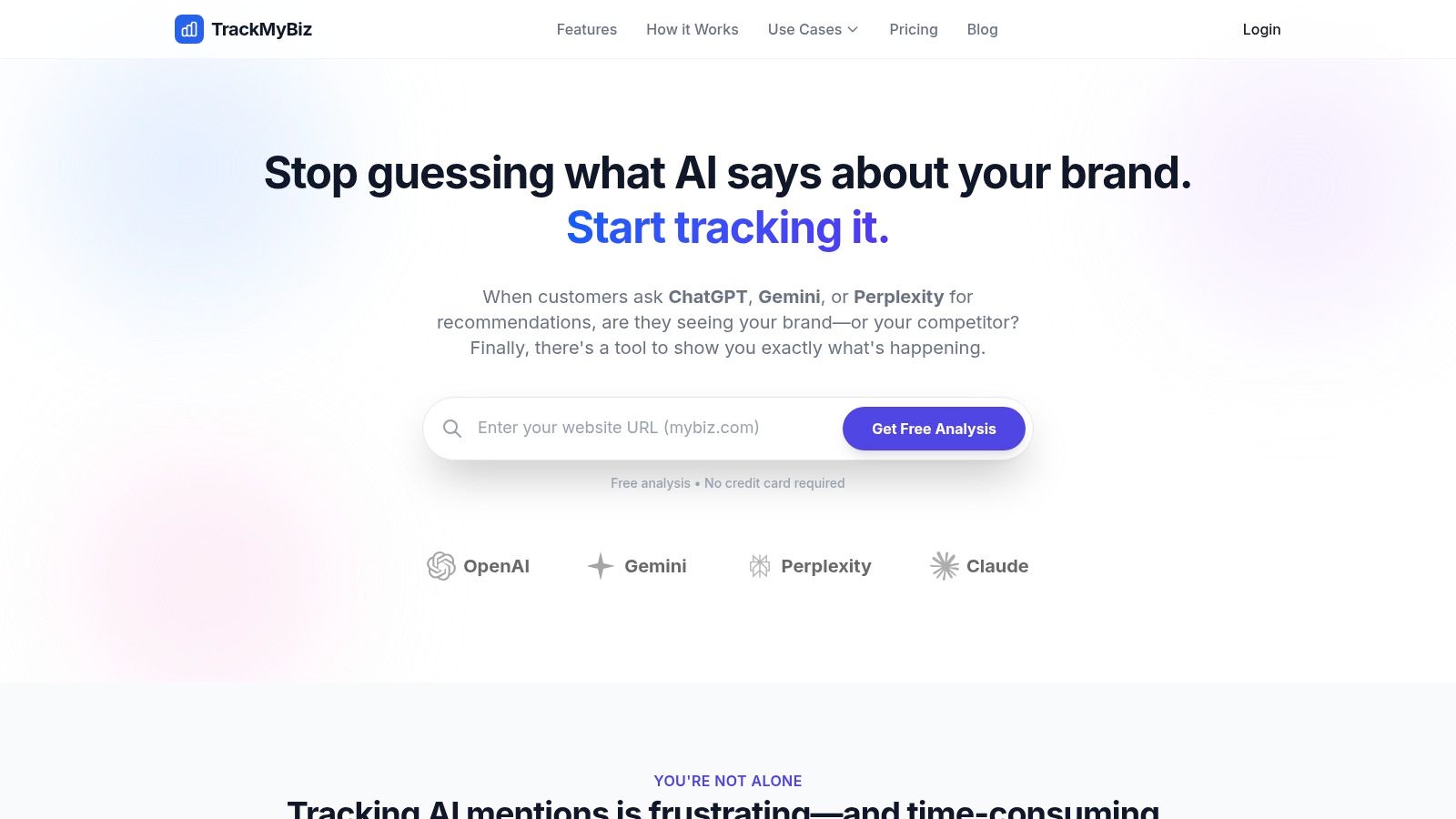
As search behavior shifts from traditional browsers to conversational AI, understanding your brand's presence in large language models (LLMs) is no longer a luxury; it's a necessity. TrackMyBiz emerges as a powerful and purpose-built platform in this new frontier, making it one of the best competitive intelligence tools for the modern era. It moves beyond conventional SEO and social listening to monitor exactly what AI chatbots like ChatGPT, Gemini, and Claude are telling potential customers about your business and your competitors.
TrackMyBiz automates the tedious, unreliable process of manually querying AI models. Instead, it runs hundreds of prompts systematically to create a stable "BrandRank" score, offering a clear view of your visibility and sentiment trends over time. This approach transforms a chaotic data source into a reliable intelligence stream, showing you not just if you're mentioned, but how and why.
Key Features and Strategic Advantages
The platform’s standout feature is its Safety Engine. This innovative tool cross-references every LLM response against the real data on your website. It instantly flags and alerts you to costly "hallucinations" such as incorrect business hours, wrong pricing, or false "permanently closed" statuses. For a local restaurant or multi-location retailer, this function is an invaluable defense against AI-driven misinformation that directly impacts revenue.
Furthermore, its dashboards are designed for action, not just observation. You get side-by-side competitor comparisons, regional tracking, and source transparency, which reveals the websites or reviews an LLM cites when making a recommendation. This is crucial for understanding why a competitor might be favored and provides a clear roadmap for your content and PR strategy. For a deeper dive into this area, TrackMyBiz offers a guide on how to perform competitor AI analysis.
Pricing and Usability
TrackMyBiz offers a remarkably low barrier to entry. You can run a free scan in under two minutes without a credit card to get an immediate snapshot of your AI presence. Paid plans are transparent and affordable:
- Basic: $4.99/month for 50 prompts and 3 competitors.
- Advanced: $9.99/month for 100 prompts and 10 competitors.
- Enterprise: $89/month for 1,000 prompts, 50 competitors, and advanced analytics.
All plans are backed by a 30-day money-back guarantee, making it a low-risk investment for teams of any size.
Pros and Cons
Pros:
- Proactive AI Monitoring: Tracks multiple major LLMs (ChatGPT, Gemini, etc.) to provide aggregated, stable trend data.
- Revenue Protection: The Safety Engine actively finds and alerts you to damaging AI hallucinations.
- Actionable Competitive Insights: Pinpoints when and why competitors are recommended, with source transparency.
- Extremely Accessible: A free instant scan, fast setup, and very affordable starter plans make it easy to adopt.
Cons:
- Focused Scope: Its strength is its focus on major LLMs; it may not catch mentions in every niche or emerging AI model unless configured.
- Tier-Based Limits: The number of tracked prompts and competitors is capped on lower-tier plans, which may require an upgrade for larger businesses.
2. Similarweb
Similarweb has established itself as one of the best competitive intelligence tools for its comprehensive digital market intelligence, offering a powerful yet accessible view of any website's traffic and engagement metrics. It excels at providing a holistic picture of a competitor’s digital footprint, from audience demographics to the specific channels driving their traffic.
The platform's user interface is clean and intuitive, making it easy to benchmark your performance against rivals in key areas like referral traffic, search keywords, and social media engagement. For agencies and marketing teams, this allows for quick identification of untapped opportunities or threats in the digital landscape. A key use case is analyzing a competitor's channel mix to discover which affiliates or paid search keywords are most effective for them, informing your own strategy without costly trial and error.
Key Features & Considerations
- Traffic & Engagement Analysis: See estimated visits, time on site, bounce rate, and page views.
- Audience Demographics: Understand competitor audience geography, interests, and other visited websites.
- Channel Breakdown: Analyze traffic from direct, search, social, referral, email, and display ads.
- Pricing: Starts with a limited free version. Paid plans like "Starter" and "Advanced" offer more historical data, more results per metric, and additional features. Enterprise plans unlock the full dataset but come at a significant cost.
Pro-Tip: Use Similarweb's alerts to receive email notifications when a competitor's traffic spikes or a new referring site sends them significant volume. This can signal a successful PR hit or marketing campaign you need to analyze.
While lower-tier plans limit historical data to a few months, Similarweb provides an excellent balance of depth and usability for ongoing monitoring. Its insights are crucial for any business looking to understand the digital ecosystem, complementing the detailed brand and reputation monitoring you can achieve with tools that leverage AI for brand monitoring.
Website: https://www.similarweb.com
3. Semrush
Semrush is a titan in the digital marketing space, evolving from a pure SEO tool into an all-in-one suite that is among the best competitive intelligence tools available. Its strength lies in its vast and interconnected toolkits, allowing users to dissect a competitor's online strategy from search and advertising to content and social media. The platform is particularly powerful for identifying specific keywords and ad copy that drive competitor success.
For digital marketers and agencies, Semrush provides actionable data to close competitive gaps. A common use case is running a Keyword Gap analysis to find valuable keywords that competitors rank for but you don't. Similarly, its Advertising Research tool uncovers a rival's ad spend, top-performing ad copy, and display ad creatives, offering a blueprint for building a more effective paid strategy. This granular insight saves significant time and budget on campaign testing.
Key Features & Considerations
- Gap Analysis: Compare your domain against up to four competitors to find unique and common keywords for both organic and paid search.
- Advertising & PLA Research: Analyze competitors' Google Ads strategies, see their live ad copy, and research their Product Listing Ads.
- Comprehensive Toolkits: Offers specialized suites for SEO, Content Marketing, Social Media, Local SEO, and Market Research.
- Pricing: Begins with a limited free account. Paid plans like "Pro," "Guru," and "Business" scale up based on the number of projects, keywords to track, and reporting capabilities. Additional users and specialized toolkits often come at an extra cost.
Pro-Tip: Use the Competitive Positioning Map within the Market Explorer tool to visualize your brand's position against key rivals. This helps identify whether you are a Niche Player, Leader, or Challenger, guiding your broader strategic decisions.
While the sheer number of tools can be overwhelming for newcomers and costs can escalate with add-ons, the platform's mature ecosystem and extensive learning resources provide immense value. Semrush is an indispensable asset for businesses aiming to gain a competitive edge in search and advertising.
Website: https://www.semrush.com
4. Ahrefs
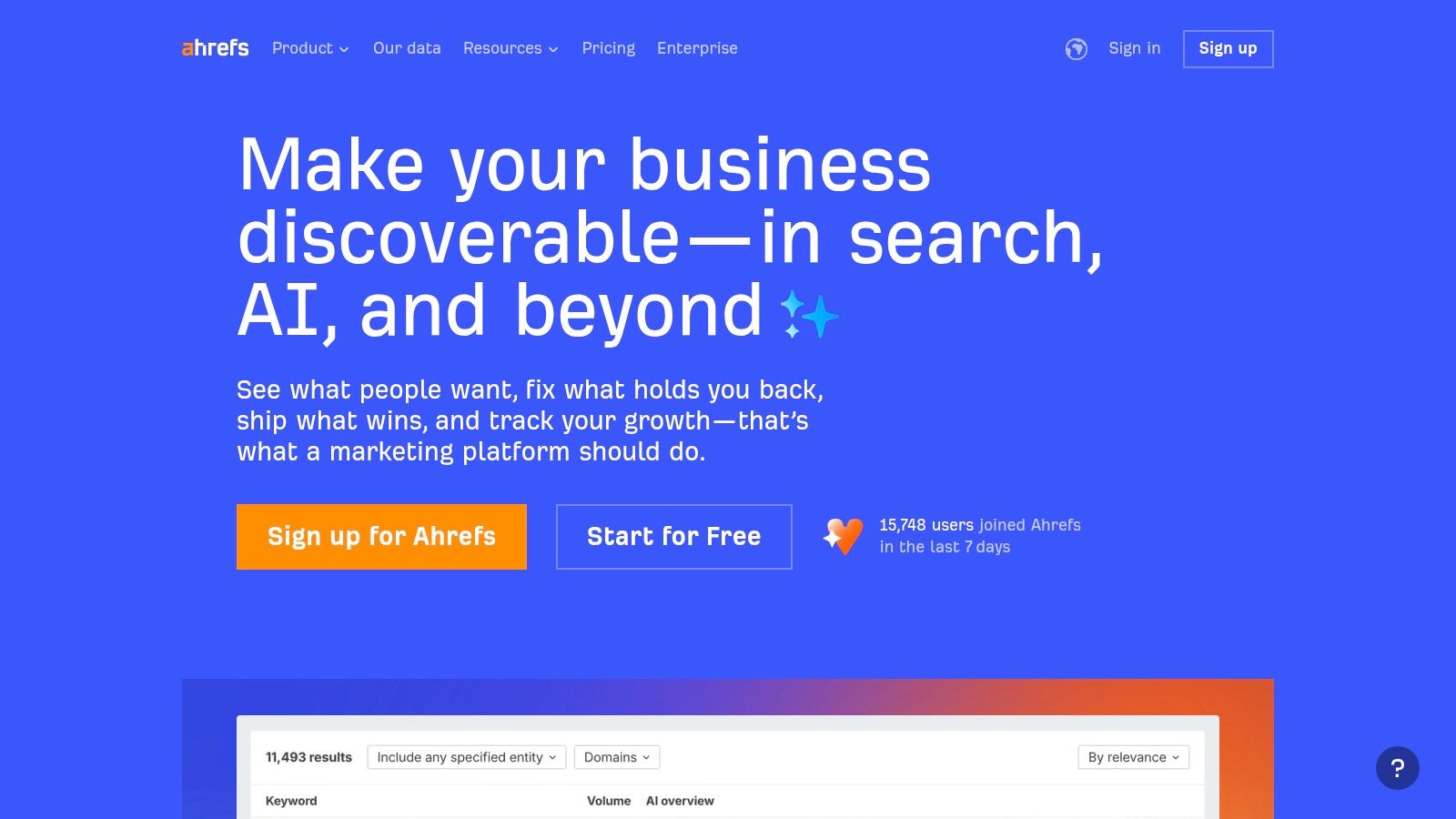
Ahrefs is a powerhouse in the world of SEO and a critical component of any digital competitive intelligence toolkit. It is renowned for its massive backlink index and historical search engine results page (SERP) data, making it an indispensable resource for deconstructing a competitor's organic search strategy. The platform excels at uncovering the exact keywords rivals are ranking for, the content that earns them the most valuable backlinks, and how their visibility has trended over time.
For digital marketers and SEO specialists, Ahrefs provides a clear roadmap to outrank the competition. A common use case is running a competitor's domain through the "Site Explorer" to identify their top-performing pages and the keywords driving traffic to them. This "content gap" analysis reveals high-value topics your own site is missing, allowing you to create content that directly targets your competitor's audience and captures their search traffic.
Key Features & Considerations
- Site Explorer: A comprehensive tool to analyze any website's backlink profile, organic keywords, and paid search campaigns.
- Keywords Explorer: Deep keyword research tool with accurate difficulty scores and advanced metrics like "clicks" and SERP feature analysis.
- Content Gap Analysis: Quickly find keywords that your competitors rank for, but you don’t.
- Pricing: Ahrefs offers tiered plans starting with "Lite" for individuals and small businesses, scaling up to "Standard," "Advanced," and "Enterprise" plans for larger teams and agencies. Pricing can be a significant investment, especially for access to more extensive data and user seats.
Pro-Tip: Use the "Top Pages" report in Site Explorer and filter by "HTTP code" to find a competitor's broken pages that still have backlinks pointing to them. You can then create similar content on your site and ask those linking sites to update their link to your working page, a strategy known as broken link building.
While Ahrefs is primarily focused on organic search intelligence and lacks the deep paid advertising insights of other tools, its depth in backlink and content analysis is unparalleled. It is one of the best competitive intelligence tools for any business where organic search is a critical customer acquisition channel.
Website: https://ahrefs.com
5. SpyFu
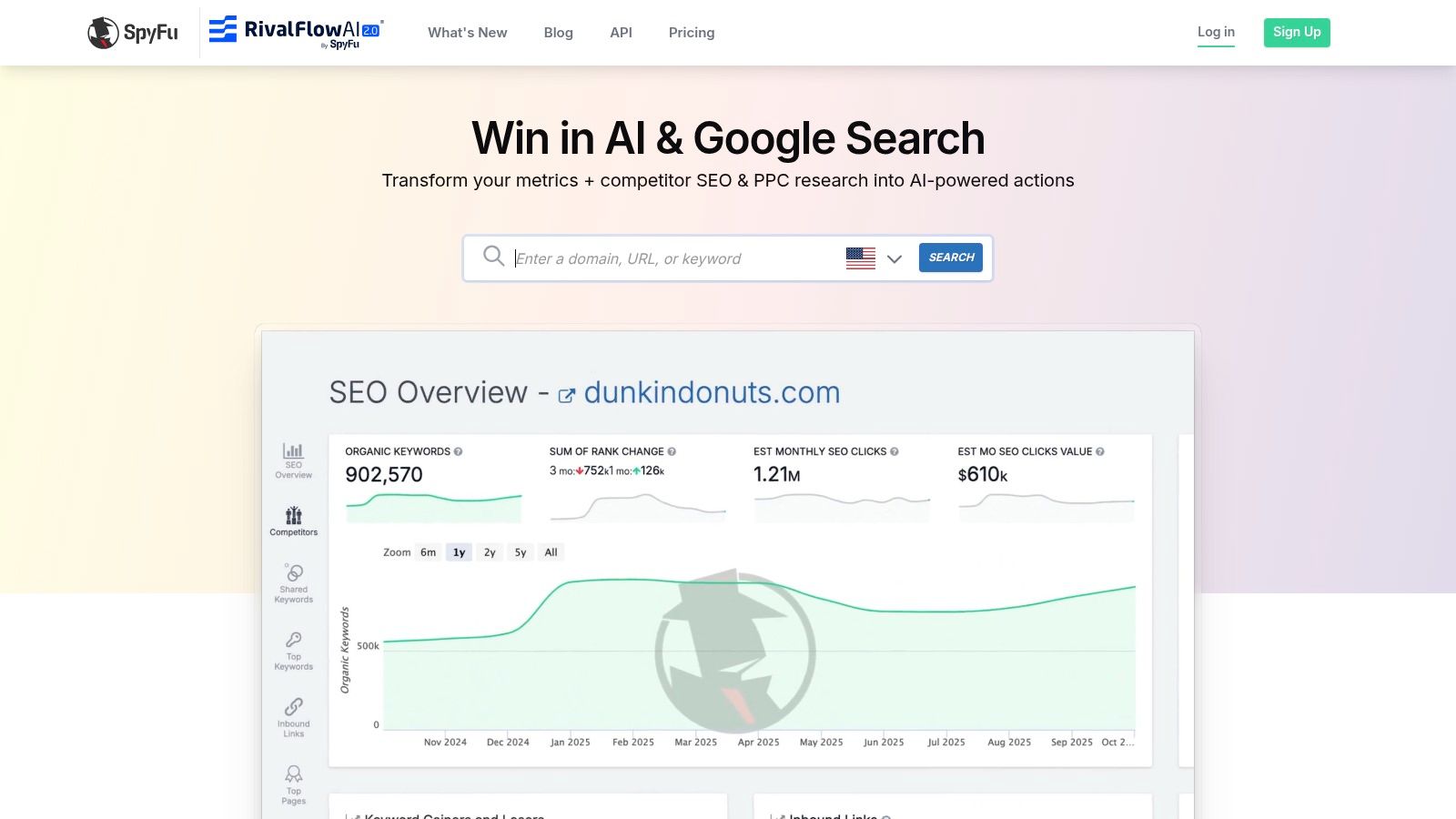
SpyFu is a standout competitive intelligence tool laser-focused on the world of search marketing, particularly paid search. It excels at uncovering the most profitable keywords and ad strategies of competitors, making it an invaluable asset for PPC managers and SEO specialists looking to gain an edge in search engine results pages. The platform essentially provides a historical playbook of what has worked (and what hasn't) for any domain in Google Ads.
Its core value lies in its ability to reverse engineer a competitor's paid search campaigns. You can see every keyword they've bid on, every ad variation they've tested for the last 15+ years, and their estimated monthly ad spend. This level of detail allows digital marketing teams to sidestep costly trial-and-error by learning directly from their rivals' paid search history, making it one of the best competitive intelligence tools for campaign planning.
Key Features & Considerations
- PPC & Ad History: Provides detailed data on competitor Google Ads campaigns, including historical keyword data, ad copy, and budget estimates.
- SEO Competitor Analysis: Features like "Kombat" show keyword overlap between you and your top rivals to identify valuable organic keyword gaps.
- Unlimited Data: Paid plans offer unlimited searches, exports, and data, a significant advantage over competitors that cap results at lower price tiers.
- Pricing: Known for its budget-friendly plans, especially for U.S.-based SMBs. The Basic plan offers significant value, with Professional and Team plans adding API access and more comprehensive reporting features.
Pro-Tip: Use the "Top Keywords" report to identify a competitor's most profitable search terms. The report details the cost per click and monthly searches, helping you prioritize high-value keywords for your own campaigns.
While SpyFu’s broader market intelligence and traffic analysis are less robust than enterprise suites like Similarweb, its deep, specialized focus on search marketing provides unmatched value for PPC-focused teams. The interface is highly intuitive for search marketers but might be less so for general strategists.
Website: https://www.spyfu.com
6. Crayon
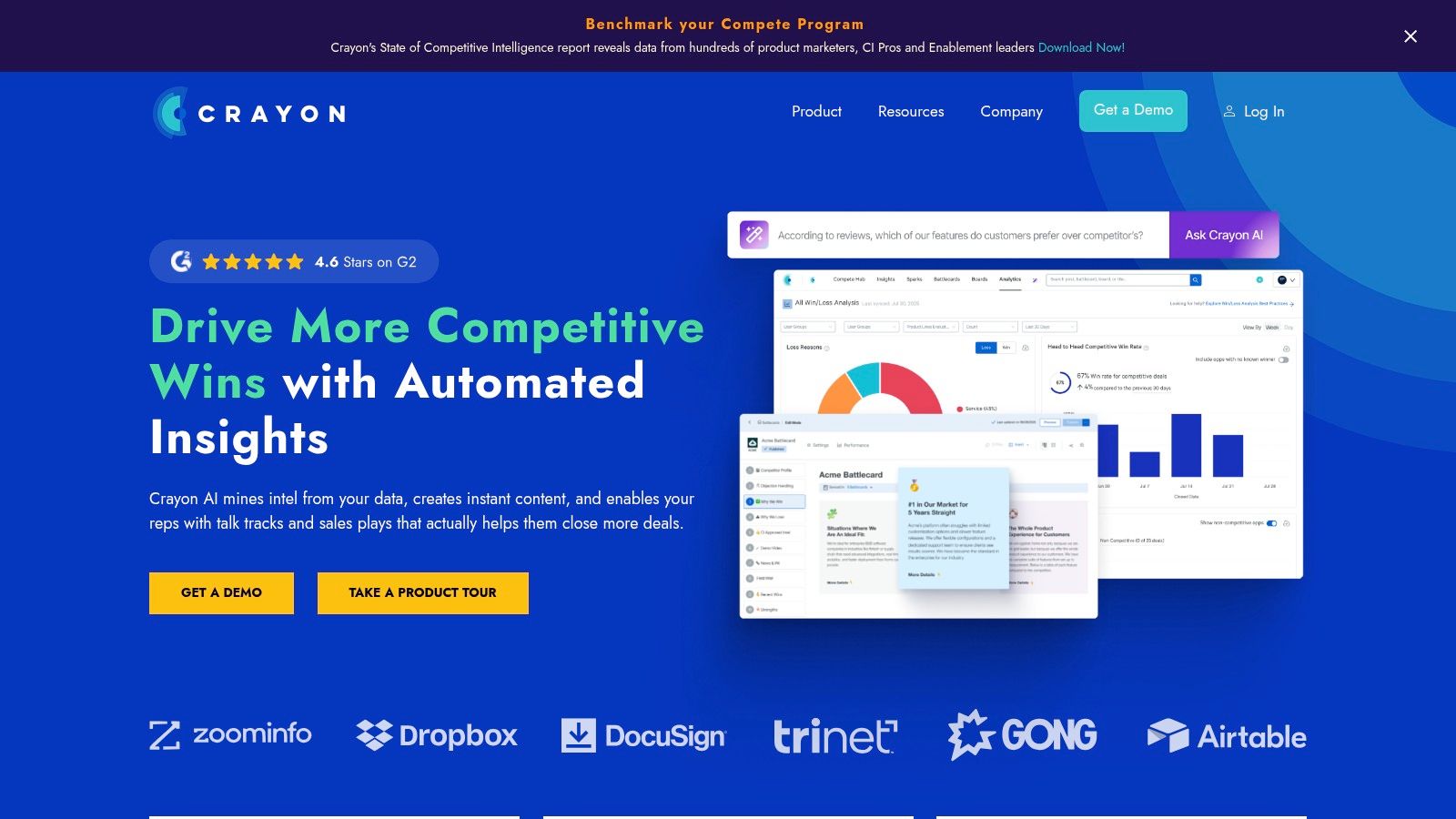
Crayon is a purpose-built competitive intelligence platform designed to automate the tracking, analysis, and distribution of competitor insights across an organization. It moves beyond simple monitoring by creating an operational hub for CI, focusing on turning raw data into actionable intelligence for sales, marketing, and product teams. The platform excels at capturing a competitor's complete digital footprint and distilling it into strategic assets like battlecards.
For enterprise and mid-market companies, Crayon automates the once-manual process of gathering intel, freeing up teams to focus on strategy. A key use case is its ability to automatically update sales battlecards with the latest competitor messaging, pricing changes, or product launches, ensuring the revenue team is always equipped with timely and accurate information. This direct integration into sales workflows makes it one of the best competitive intelligence tools for enablement.
Key Features & Considerations
- Automated Intel Gathering: Tracks over 100 data types across websites, social media, review sites, and more.
- Sales Enablement Focus: Features AI-powered battlecard creation and auto-refresh capabilities.
- Deep Integrations: Connects with core business tools like Salesforce, Slack, Gong, and other enablement platforms to embed intel where teams work.
- Pricing: Available by quote only and is geared toward mid-market and enterprise budgets. It requires a structured onboarding process to realize its full potential.
Pro-Tip: Use Crayon’s Slack integration to create dedicated channels that push real-time alerts about specific competitors to relevant teams. This keeps product managers aware of feature releases and marketing teams informed of new campaigns instantly.
While its enterprise focus means it's a significant investment, Crayon provides a powerful, centralized solution for operationalizing competitive intelligence. Its automation is a key differentiator, especially when compared to tools focused on manual analysis or AI-powered brand monitoring for SaaS companies that focus more on reputation and brand perception.
Website: https://www.crayon.co
7. Klue
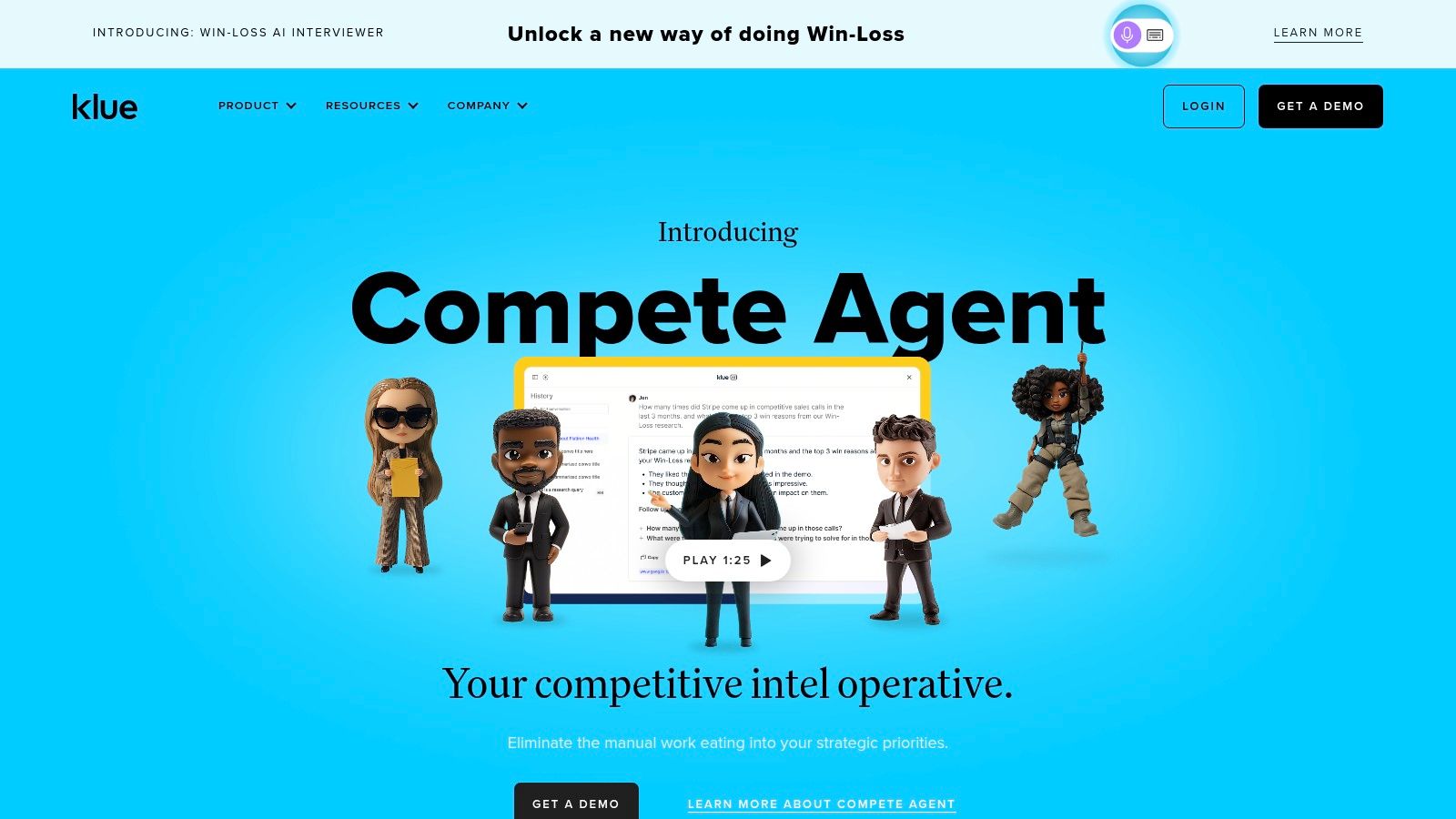
Klue shifts the focus of competitive intelligence from data collection to sales enablement, positioning itself as a premier platform for activating insights within go-to-market teams. It excels at consolidating competitive research into dynamic, digestible battlecards and playbooks that are embedded directly into the daily workflows of sales reps. This ensures that timely, relevant information is available when it matters most: during a sales call or a deal negotiation.
The platform's strength lies in its deep integration ecosystem, connecting with tools like Salesforce, Slack, and Highspot to push competitive intel to the front lines. Rather than simply housing data, Klue is designed to drive adoption and measure the impact of competitive programs on key business metrics like win rates. This makes it one of the best competitive intelligence tools for organizations looking to bridge the gap between market research and revenue generation.
Key Features & Considerations
- Dynamic Battlecards: Create and distribute up-to-date competitive comparisons, objection handling guides, and positioning points.
- Deep GTM Integrations: Seamlessly connects with CRM (Salesforce), enablement platforms (Highspot, Seismic), and communication tools (Slack, Teams).
- Usage & Impact Reporting: Track how sales teams consume competitive content and correlate it with performance metrics like win rates.
- Pricing: Pricing is not publicly listed and is geared towards enterprise-level customers. The platform requires dedicated internal ownership for content curation and process management to achieve the best results.
Pro-Tip: Leverage Klue’s Slack or Teams integration to create a dedicated channel where sales reps can ask for competitive information on the fly. Product marketers can then answer directly and simultaneously update the relevant battlecard for future use.
While it is a significant investment requiring active management, Klue provides an unmatched solution for organizations that need to ensure their competitive intelligence is not just collected but consistently and effectively used by their revenue teams. Its focus on adoption and tangible impact makes it a strategic asset for scaling competitive functions.
Website: https://klue.com
8. Kompyte
Kompyte, now part of the Semrush ecosystem, carves out a specific niche as one of the best competitive intelligence tools by focusing on sales enablement and automated monitoring. It excels at tracking competitor activities like website changes, product updates, and content releases, then translating those insights into actionable sales battlecards and reports for frontline teams.
The platform is designed to close the gap between intelligence gathering and sales execution. A primary use case involves automatically detecting a competitor's new pricing page and instantly alerting the sales team via Slack or CRM, complete with an updated battlecard outlining key talking points. This direct integration into sales workflows ensures that competitive insights are not just collected but actively used to win deals. Its strength lies in operationalizing intelligence rather than just presenting broad market data.
Key Features & Considerations
- Automated Competitor Tracking: Monitors websites, social media, content, and product changes in real-time.
- Sales Battlecards & Reports: Offers unlimited, customizable battlecards to equip sales teams with timely, relevant information.
- Key Integrations: Connects directly with CRM (Salesforce, HubSpot), communication (Slack, Teams), and other sales enablement platforms.
- Pricing: Available by quote only, with plans structured by the number of tracked competitors and users. Contracts are typically annual, and higher tiers include dedicated customer success managers and onboarding support.
Pro-Tip: Leverage Kompyte's battlecard templates to quickly establish a baseline for different competitive scenarios. Customize them over time with win-loss data from your CRM to continuously refine your team's positioning and objection handling.
While Kompyte's focus on sales enablement makes it less of a broad market research tool, its automation and workflow integrations are invaluable for organizations that need to arm their revenue teams with a consistent competitive edge. The inclusion of a dedicated CSM ensures teams can effectively implement and adopt the platform.
Website: https://www.kompyte.com
9. AlphaSense
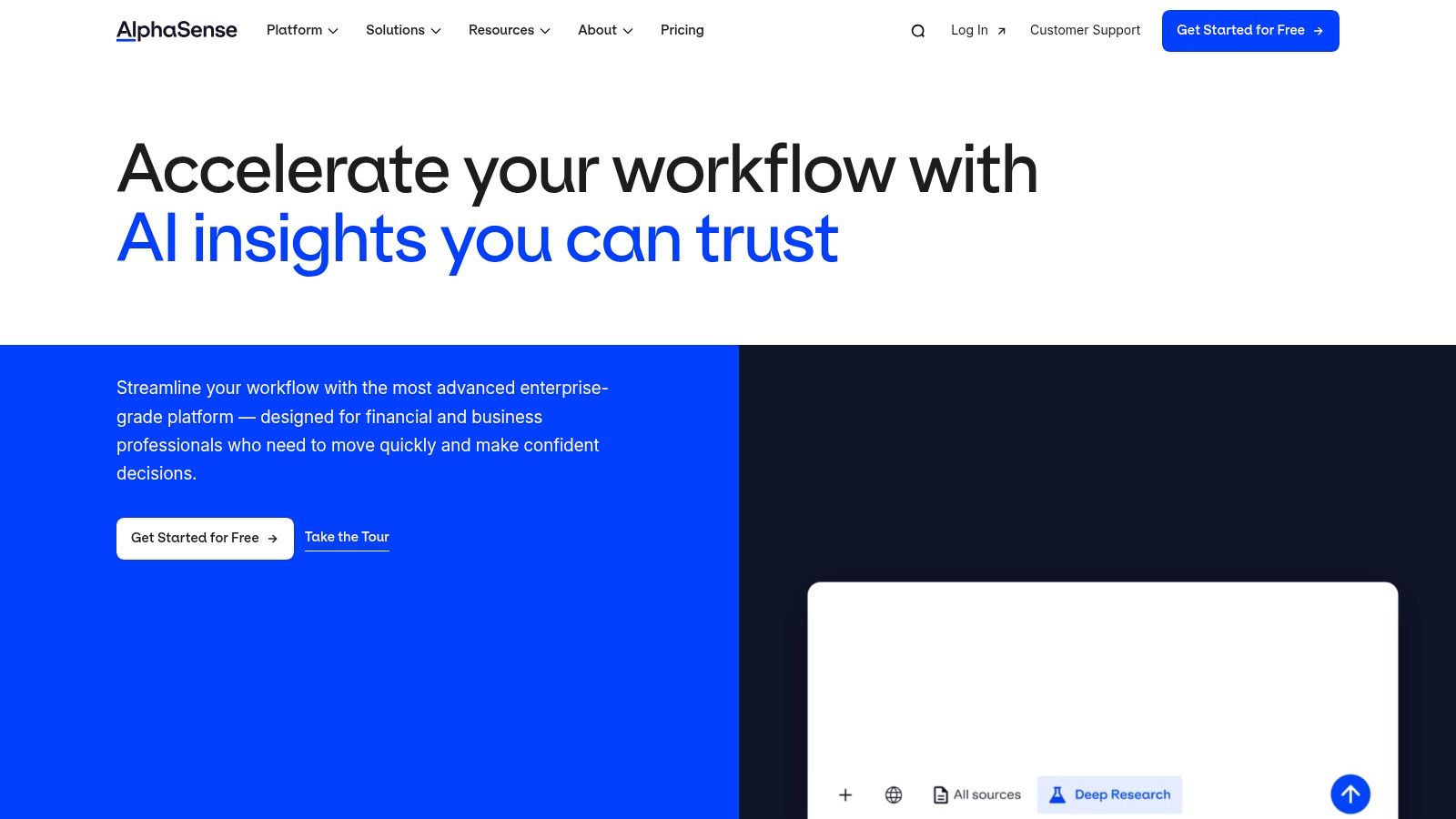
AlphaSense moves beyond typical digital marketing metrics to offer an enterprise-grade market intelligence platform focused on qualitative and quantitative research. It consolidates a massive library of premium content, including broker research, expert call transcripts, SEC filings, and global news, making it one of the best competitive intelligence tools for deep strategic analysis rather than just website traffic monitoring. The platform is designed for corporate strategy, finance, and M&A teams who need analyst-grade insights.
Its power lies in its AI-powered search engine, which can understand natural language queries to instantly surface relevant insights and data points from millions of documents. This allows users to quickly uncover competitor strategies, market trends, and expert opinions that would otherwise require weeks of manual research. A key use case is tracking a competitor’s R&D mentions across earnings calls and patent filings to anticipate new product launches.
Key Features & Considerations
- Premium Content Library: Access to Wall Street equity research, expert call transcripts, patent filings, and more.
- Generative AI Search: Advanced search and summarization tools ("Smart Summaries") that synthesize information and provide cited answers.
- Internal Document Integration: Users can upload their own documents to search alongside AlphaSense's external content library.
- Pricing: Enterprise-level pricing is not publicly listed and is quoted based on team size and specific needs. It is a significant investment and is not suited for small businesses or simple marketing intelligence.
Pro-Tip: Use the dashboard and alerting features to create a "watch list" for key competitors, products, or market themes. You'll get real-time notifications when new documents mention your tracked topics, ensuring you never miss a critical development.
While AlphaSense may be overkill for teams solely focused on SEO or paid ad competition, it is an unparalleled resource for corporate strategists and financial analysts needing to perform deep-dive research. Its ability to unify disparate, high-value data sources provides a strategic advantage that few other platforms can match.
Website: https://www.alpha-sense.com
10. CB Insights
CB Insights is a market and strategy intelligence platform that shifts competitive analysis from reactive monitoring to proactive, predictive insight. It stands out by focusing on private companies, emerging technologies, and venture capital trends, providing a lens into the future of markets before they become mainstream. This makes it one of the best competitive intelligence tools for corporate strategy, M&A, and innovation teams.
The platform leverages vast datasets on companies, investors, and patents, applying machine learning to generate predictive scores. Its Mosaic Score, for example, gauges the health and growth potential of private companies, offering a powerful signal for identifying future market leaders or disruptive threats. A common use case is mapping an entire technology sector, identifying key players, and tracking investment flows to anticipate where the industry is headed and who is best positioned to win.
Key Features & Considerations
- Vast Company Database: Access detailed profiles on millions of private and public companies, including funding, investors, and partnerships.
- Predictive Analytics: Utilize proprietary metrics like the Mosaic Score and Commercial Maturity models to assess company health and market readiness.
- AI-Powered Insights: Get personalized watchlists, alerts, and AI-generated summaries on market shifts and competitor moves.
- Pricing: Available by quote only and is squarely aimed at enterprise-level clients. There is no free version or transparent pricing for smaller teams.
Pro-Tip: Use the CB Insights browser extension to instantly pull up company data while researching a competitor or potential partner online. This integrates their powerful database directly into your workflow, saving significant research time.
While its enterprise focus and steep learning curve make it inaccessible for casual users or small businesses, CB Insights offers unparalleled depth for strategic, forward-looking competitive intelligence. It's an essential tool for understanding the forces shaping future market landscapes.
Website: https://www.cbinsights.com
11. Crunchbase
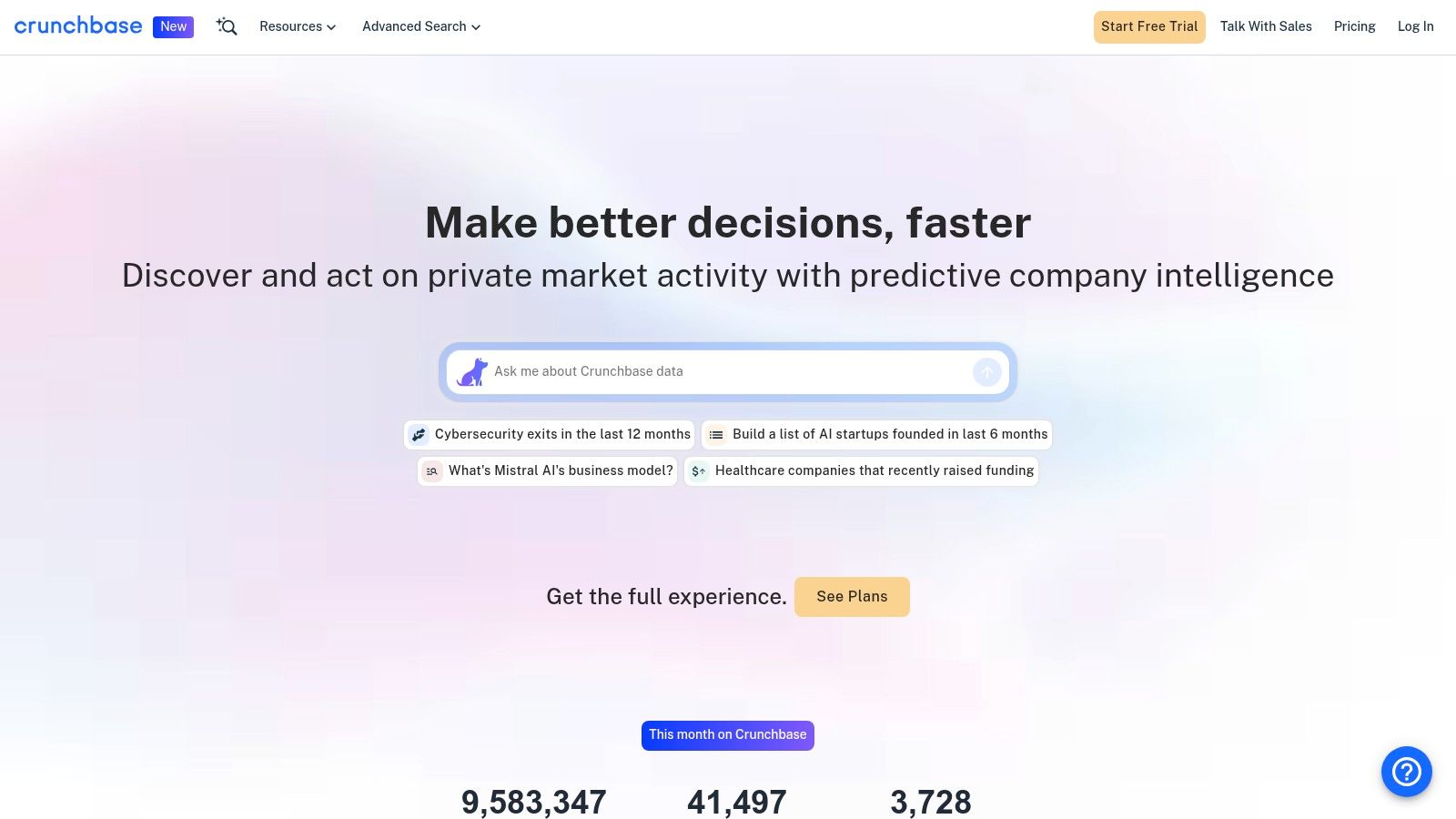
Crunchbase is a powerful company database that doubles as one of the best competitive intelligence tools for tracking private companies and emerging startups. While its primary function leans towards sales prospecting and investment research, its deep well of firmographic data, funding history, and leadership information makes it invaluable for monitoring competitors that aren't publicly traded or widely covered.
It excels at providing early signals on market shifts, such as when a private competitor raises a significant funding round, experiences a spike in headcount, or gets notable press coverage. This allows businesses, especially SMBs and startups, to keep an eye on up-and-coming rivals without needing access to expensive enterprise-level market intelligence suites. The platform's strength lies in its ability to surface crucial business health indicators that often precede major strategic moves.
Key Features & Considerations
- Company Profiles & Funding Data: Access detailed information on funding rounds, investors, acquisitions, and key personnel.
- Advanced Search & Alerts: Create custom lists of competitors and receive alerts on significant events like new funding or leadership changes.
- Growth & News Insights: Track headcount trends and aggregate recent news mentions to gauge a competitor's momentum and public perception.
- Pricing: Offers a limited free version. Paid plans ("Starter" and "Pro") are affordably priced with transparent monthly options, making them accessible. Enterprise plans add features like API access and Salesforce integration.
Pro-Tip: Set up alerts for specific funding stages or news keywords related to your competitors. An alert for a "Series B" funding round, for instance, can signal that a rival is about to scale its marketing and sales operations aggressively.
While Crunchbase offers less depth on digital marketing performance compared to tools like Similarweb, its focus on company-level data and its transparent, self-serve pricing model make it an essential tool. It's particularly useful for strategy teams and product marketers tracking emerging threats and partnership opportunities in the private market.
Website: https://www.crunchbase.com
12. Owler
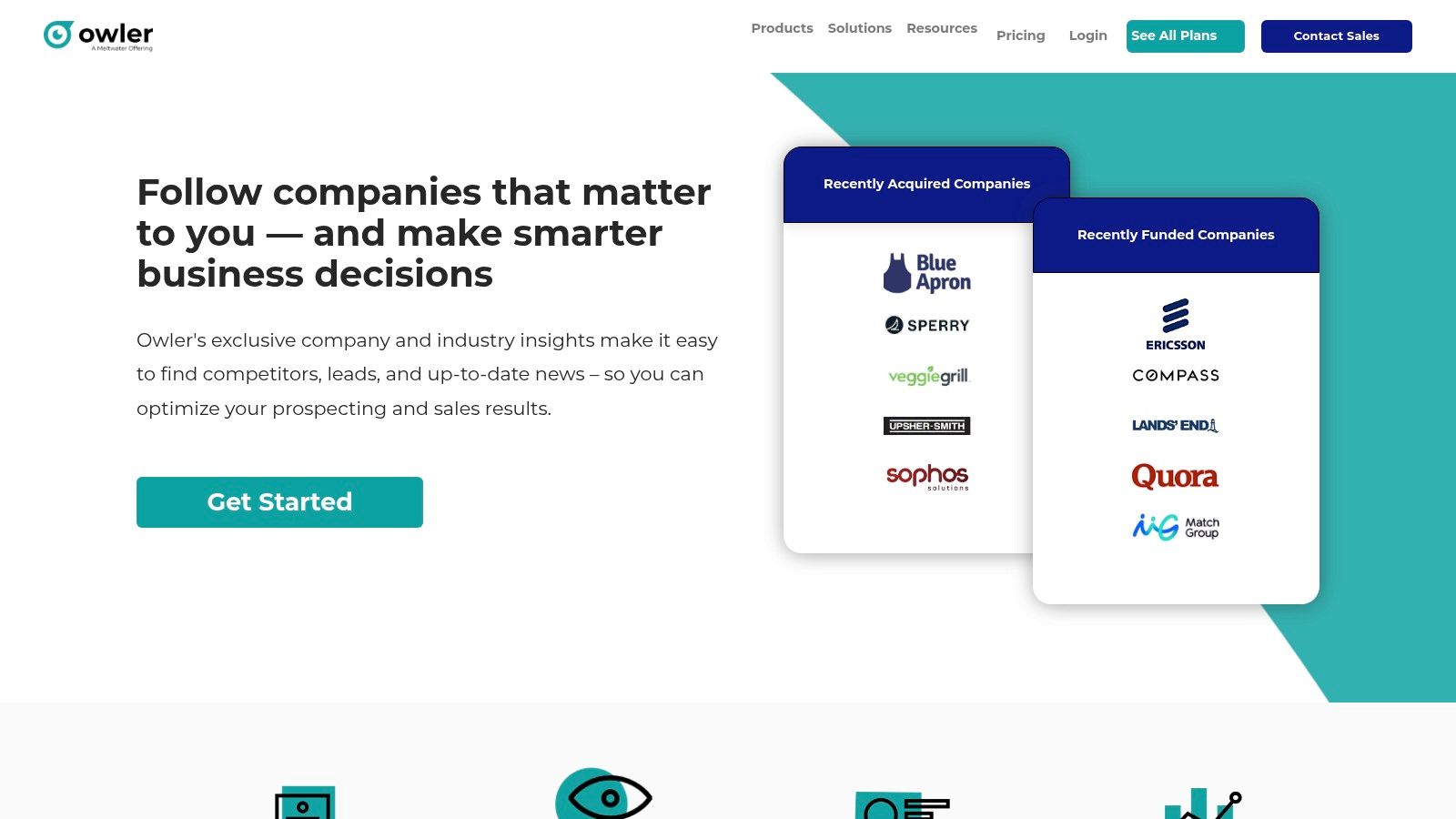
Owler operates as a crowdsourced competitive intelligence tool, offering a dynamic and real-time feed of company data and news. It excels at providing quick, high-level business intelligence, making it a popular choice for sales teams, marketers, and executives who need to stay informed about competitors, clients, and partners without delving into heavy analytics. The platform's core strength lies in its community-based approach to data gathering, which supplements public information with insights from its user base.
This makes Owler particularly useful for tracking company news, funding rounds, leadership changes, and acquisitions. It aggregates news from thousands of sources and delivers it in a digestible daily snapshot or real-time alerts, ensuring you never miss a critical update about a target company. For sales professionals, this provides timely triggers to reach out with relevant context, while marketers can monitor competitor press and strategic shifts.
Key Features & Considerations
- Company Profiles & Competitor Lists: Access profiles with estimated revenue, employee counts, and curated lists of top competitors.
- Daily News Digests & Alerts: Receive customized daily emails or instant notifications on companies you follow.
- CRM & Collaboration Integrations: Higher-tier plans offer integrations with platforms like Salesforce and Slack to embed insights into existing workflows.
- Pricing: A free plan offers limited follows and basic alerts. Paid tiers like Pro and Max unlock more companies to follow, advanced search filters, and premium integrations. Pricing requires direct contact for the most accurate details.
Pro-Tip: Set up alerts not just for direct competitors but also for key customers and prospects. News of a funding round or a major new hire can create the perfect opportunity for outreach or an upsell conversation.
While the crowdsourced data can occasionally lack the granular accuracy of enterprise-grade financial platforms, Owler provides immense value as a low-cost, easy-to-use service for daily competitive monitoring and sales prospecting. It’s an effective way to keep a pulse on the business world without a significant investment in more complex analytics tools.
Website: https://www.owler.com
Top 12 Competitive Intelligence Tools — Feature Comparison
| Product | Core features | Quality (★) | Price / Value (💰) | Target (👥) | Unique selling point (✨) |
|---|---|---|---|---|---|
| TrackMyBiz 🏆 | Multi‑LLM daily scans, Safety Engine, dashboards, regional tracking | ★★★★☆ | 💰 Free scan; Basic $4.99/mo → Enterprise $89/mo | 👥 Local businesses, PR, growth teams, agencies | ✨ Cross-checks LLM claims vs your site to flag hallucinations |
| Similarweb | Traffic & audience insights, channel mix, competitive alerts | ★★★★☆ | 💰 Published packages; mid‑range | 👥 Digital marketers, analysts | ✨ Broad market benchmarks & global coverage |
| Semrush | SEO, ads, keyword & domain toolkits, trend tools | ★★★★☆ | 💰 Tiered plans; add‑ons increase cost | 👥 SMBs, agencies, SEO teams | ✨ All‑in‑one SEO + ads toolkits |
| Ahrefs | Backlink index, Site Explorer, rank tracking, audits | ★★★★☆ | 💰 Higher cost for larger teams | 👥 SEO & content teams | ✨ Massive link index and technical audits |
| SpyFu | PPC/ad history, competitor keyword mining, unlimited searches | ★★★★☆ | 💰 Budget‑friendly for PPC teams | 👥 PPC marketers, SMBs | ✨ Generous usage limits for paid search research |
| Crayon | Automated competitor monitoring, battlecards, workflow automation | ★★★★☆ | 💰 Quote (enterprise) | 👥 Mid‑market & enterprise CI teams | ✨ CI automation + enablement integrations |
| Klue | Battlecards, boards, integrations, usage impact reporting | ★★★★☆ | 💰 Enterprise pricing (quote) | 👥 Sales, product marketing, enablement | ✨ Sales‑facing delivery + deep GTM integrations |
| Kompyte | Automated monitoring, battlecards, CRM & collaboration integrations | ★★★★☆ | 💰 Quote; annual plans typical | 👥 GTM and enablement teams | ✨ CSM/onboarding + plans by companies/users |
| AlphaSense | Generative search, premium filings & transcripts, deep research | ★★★★★ | 💰 Enterprise pricing (premium) | 👥 Strategy, finance, corporate dev | ✨ Analyst‑grade research with citations |
| CB Insights | Company database, predictive metrics, watchlists & AI insights | ★★★★☆ | 💰 Quote; enterprise focus | 👥 Strategy, M&A, market intelligence | ✨ Predictive scoring & market mapping |
| Crunchbase | Company profiles, funding, alerts, exports, prospecting lists | ★★★★☆ | 💰 Transparent self‑serve plans | 👥 SMBs, sales, startup scouts | ✨ Affordable private‑company tracking & alerts |
| Owler | Crowdsourced company news, profiles, daily digests & alerts | ★★★☆☆ | 💰 Low‑cost entry; free tier available | 👥 Small teams, sales researchers | ✨ Simple, quick competitor news & context |
Turning Intelligence into Action: Your Next Steps
Navigating the landscape of competitive intelligence has evolved beyond simply tracking keywords and backlinks. As we've explored, the modern battlefield for brand reputation and market share now extends into the complex world of AI and large language models. The tools we've detailed, from SEO powerhouses like Semrush and Ahrefs to market intelligence platforms like Crayon and Klue, each offer a unique lens through which to view your competition. Yet, the central takeaway is clear: a comprehensive strategy must now account for what AI systems are communicating about your brand.
The sheer number of options can feel overwhelming, but the selection process becomes much simpler when you reframe the question. Instead of asking "What is the single best competitive intelligence tool?", ask "Which tool solves my most critical business problem right now?" The right platform for a local retailer protecting its online reputation will be vastly different from what a B2B SaaS company needs to inform its sales enablement strategy. Your unique goals should be the ultimate filter.
Your Path to a Winning CI Strategy
Choosing a tool is not the first step; it's the result of a clear, focused strategy. Before you even sign up for a free trial, you must lay the groundwork for success. A haphazard approach to competitive intelligence yields noisy, unactionable data. A strategic one delivers a decisive advantage.
To move from analysis to action, follow this simple, four-step framework to launch your competitive intelligence program effectively:
- Define Your Primary Goal: Start with a single, clear objective. Are you aiming to capture more organic search traffic from a specific competitor? Is your goal to improve sales win rates by providing better battle cards? Or is your immediate priority to safeguard your brand's reputation and correct misinformation being spread by AI chatbots? Pinpoint your most pressing need first.
- Identify 3-5 Key Competitors: Don't try to monitor everyone at once. Begin by identifying your most direct and impactful competitors. These are the businesses you most frequently encounter in sales deals, compete with for top search rankings, or see mentioned alongside your brand. A focused approach on a smaller list will yield more meaningful insights than a broad, shallow analysis of the entire market.
- Audit Your AI Blind Spot: Before the rise of generative AI, your digital footprint was limited to search engines and social media. That is no longer the case. A crucial first step in any modern CI strategy is to establish a baseline of your AI presence. Understanding what models like ChatGPT and Google's Gemini say about you, your services, and your operating hours is a non-negotiable part of today's reputation management.
- Choose a Tool and Commit to the Trial: With your goal defined and competitors identified, revisit the list above. Select the tool that aligns most closely with your objective and budget. Whether it's a deep-dive SEO tool like SpyFu or a dedicated AI monitoring platform like TrackMyBiz, sign up for the free trial and use it exhaustively. Integrate it into your team's workflow and measure its impact against the goal you set in step one.
This structured process transforms the search for the best competitive intelligence tools from a daunting task into a strategic business decision. By focusing on your specific needs, you ensure that you invest in a solution that provides a tangible return. For an alternative perspective or to explore other top competitive intelligence tools, you may find additional resources valuable. The journey from data collection to market domination begins with a single, well-defined step.
Ready to uncover your AI blind spot? TrackMyBiz is the only competitive intelligence tool built to monitor what AI models say about your business, protecting your reputation and ensuring customers find accurate information. Get your free, instant scan to see your AI presence now at TrackMyBiz.
